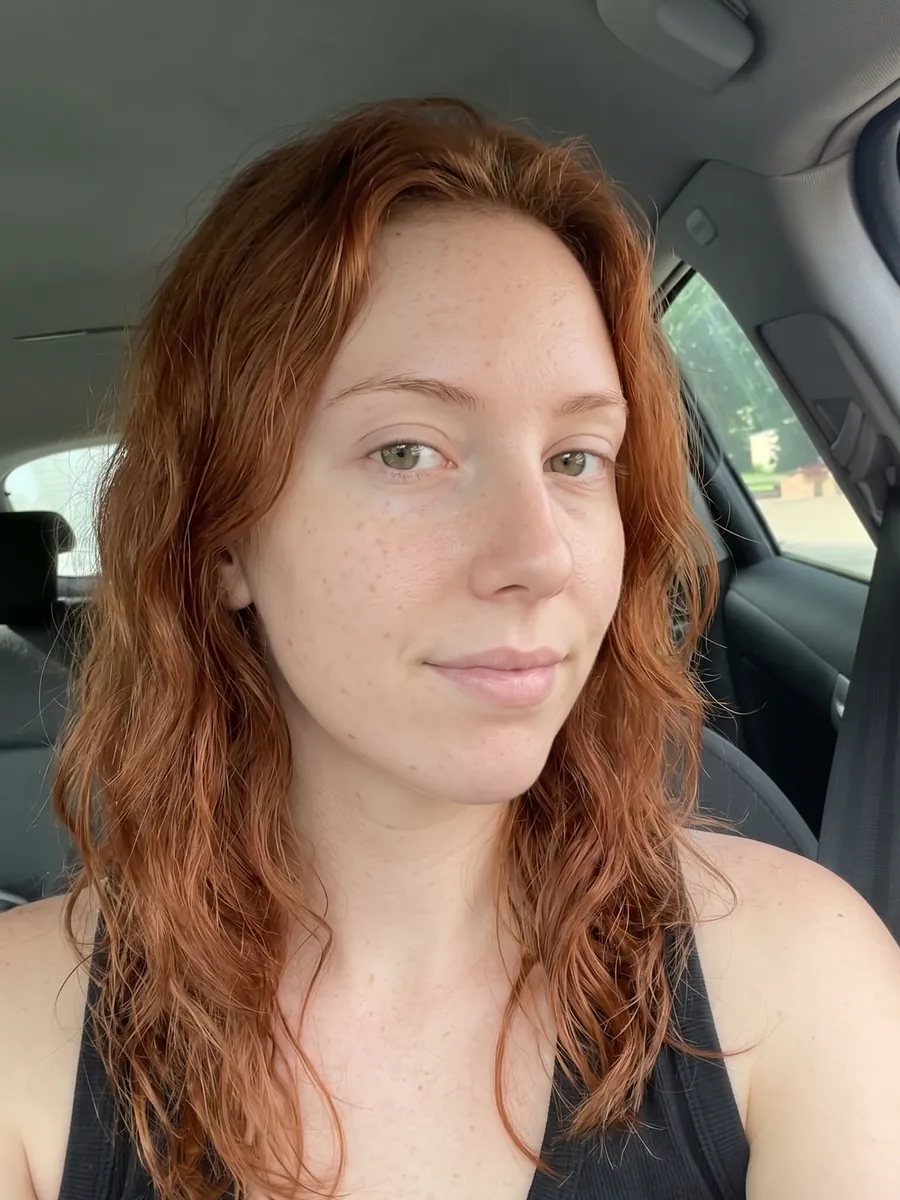
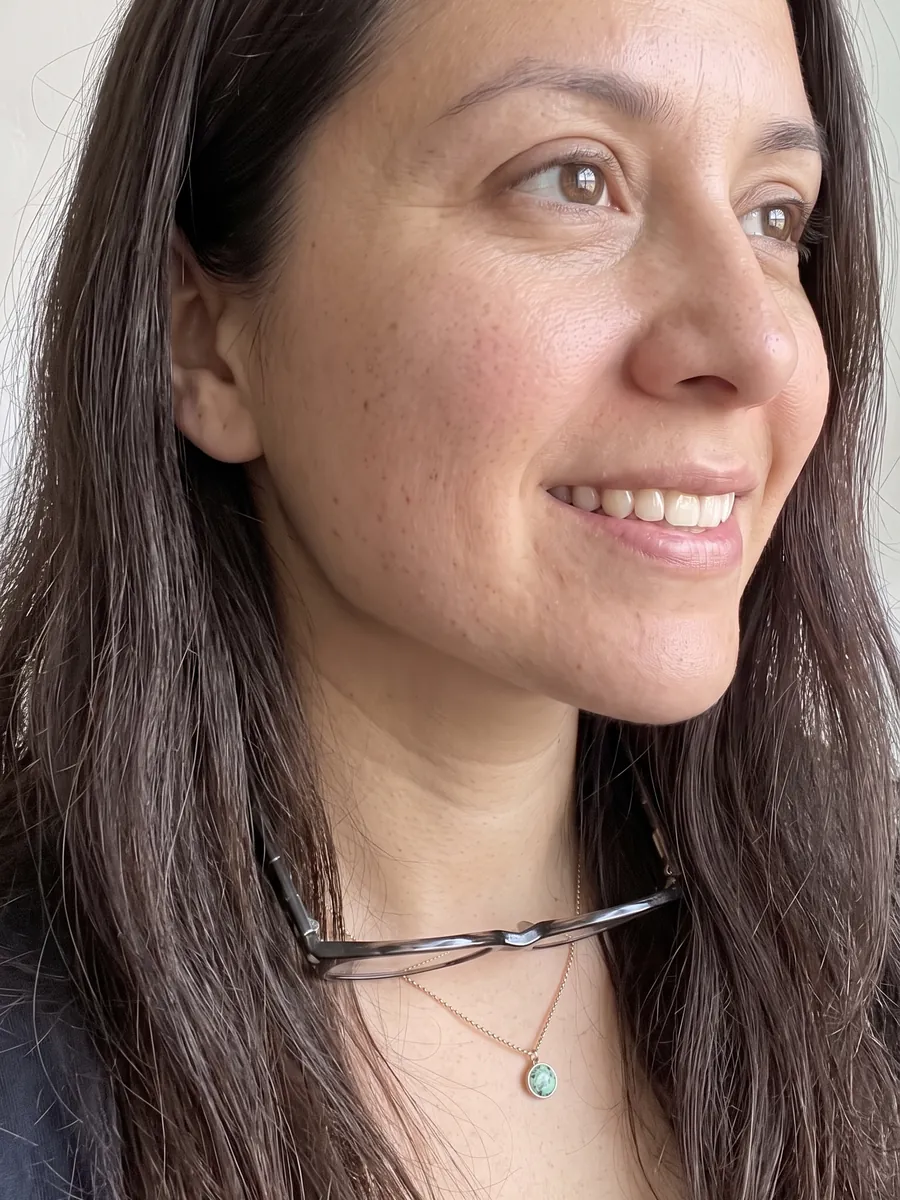
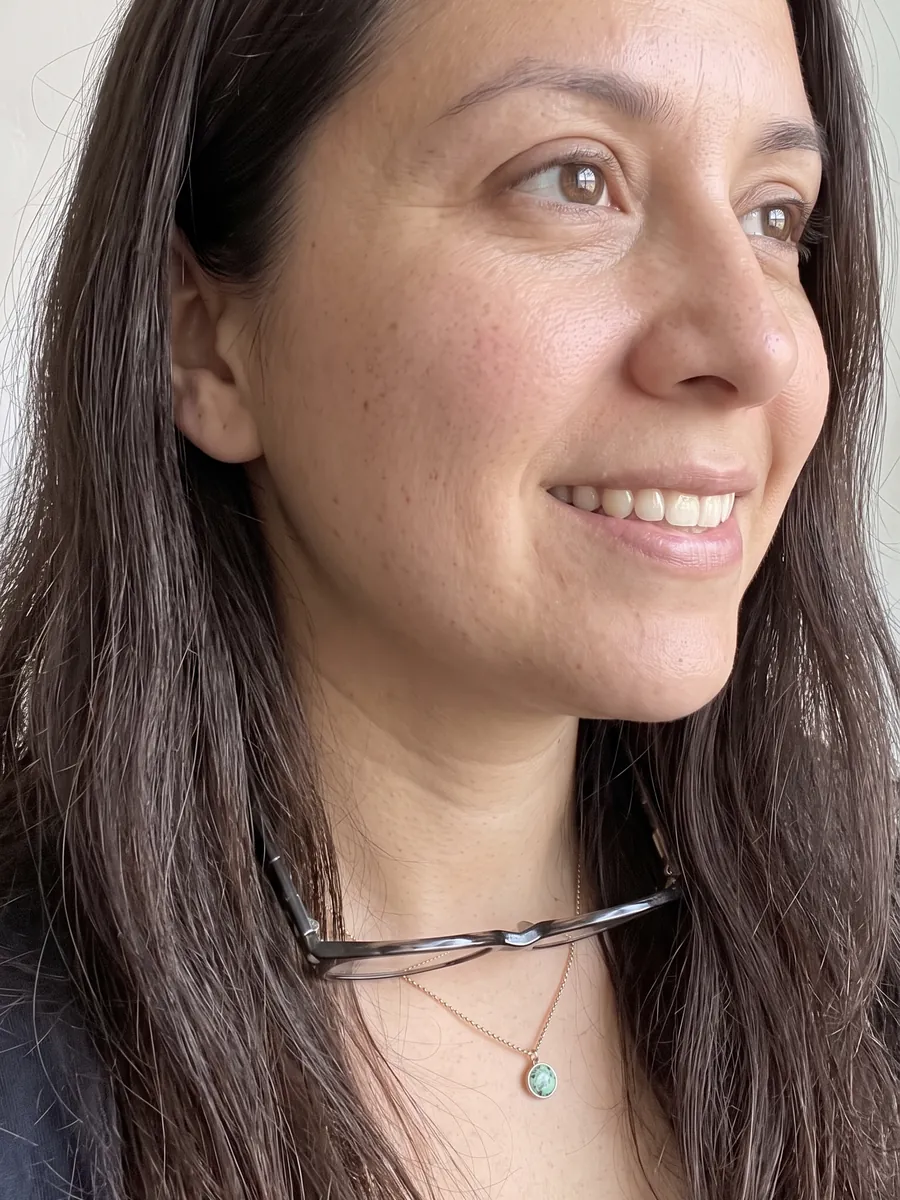
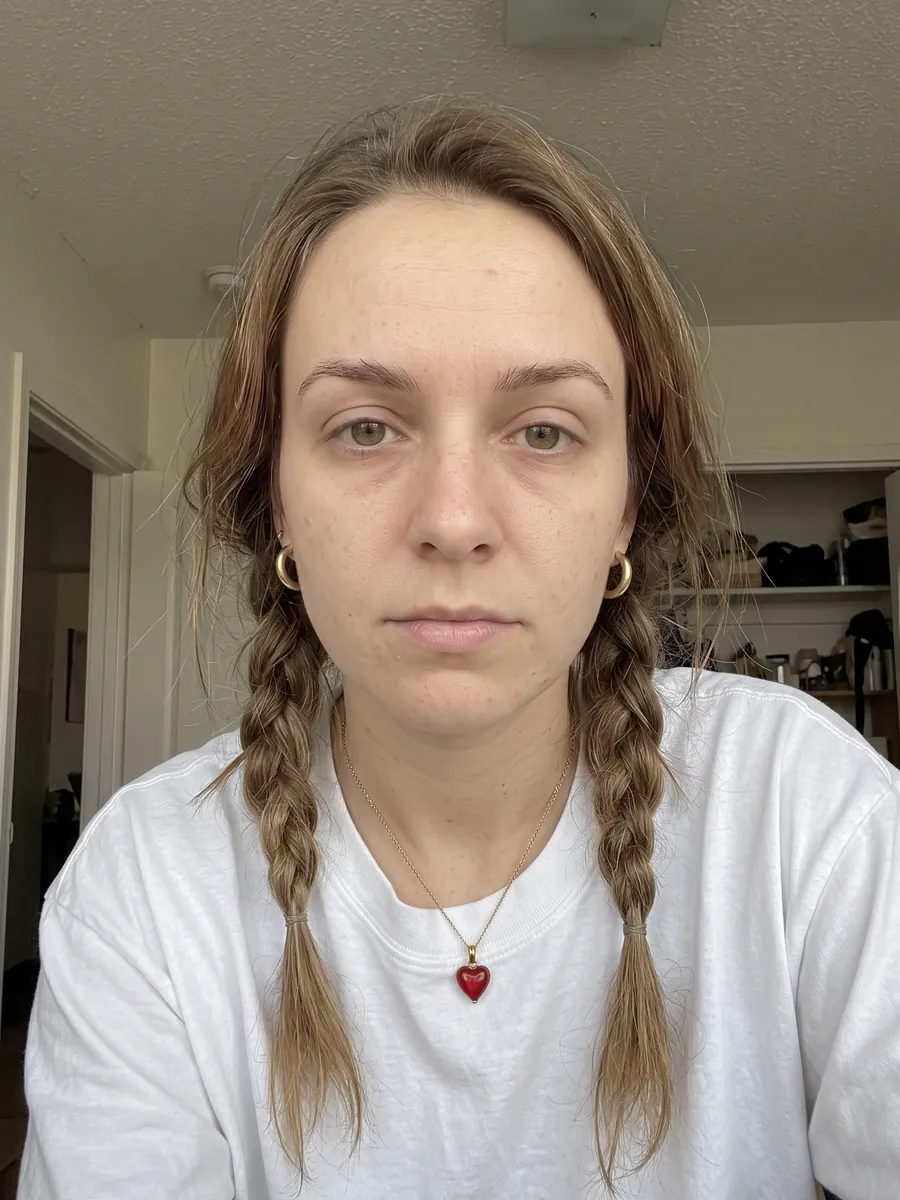
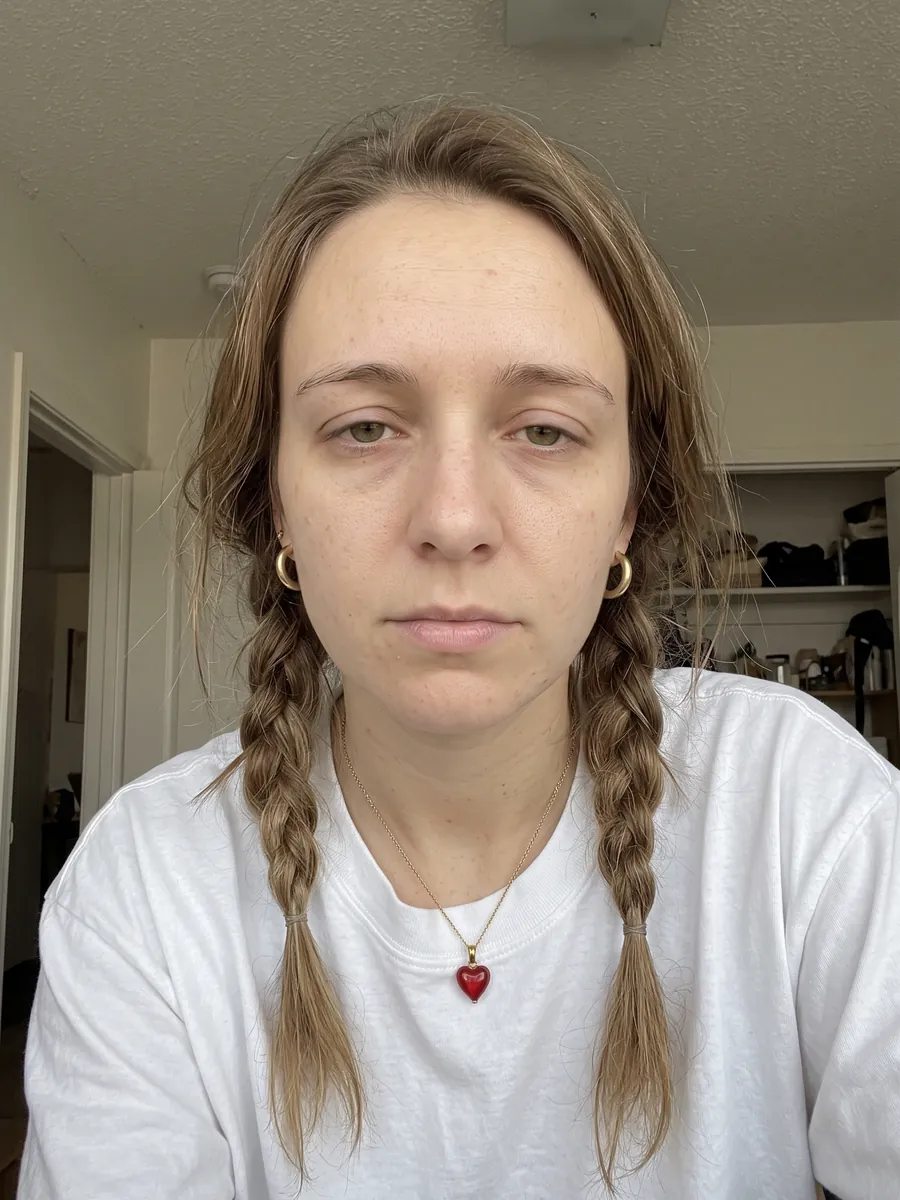
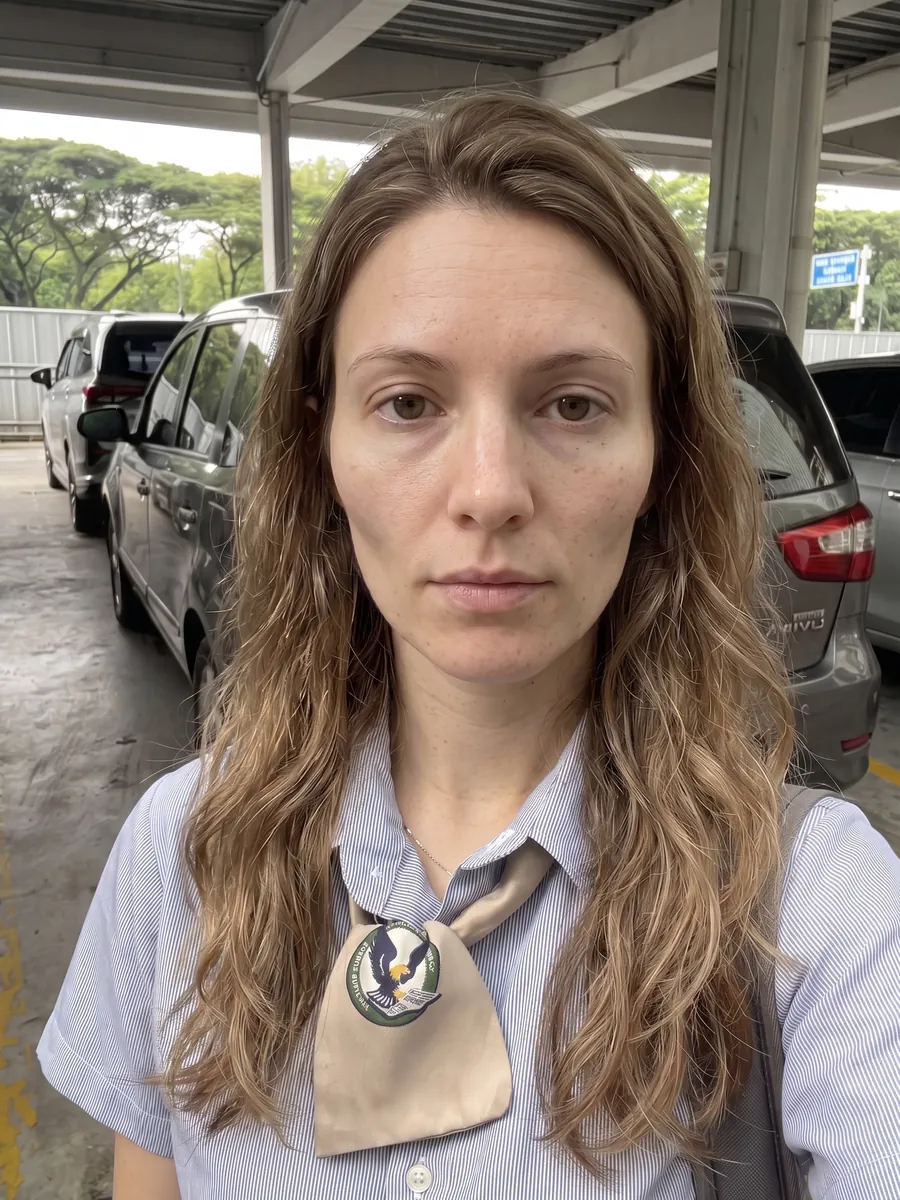
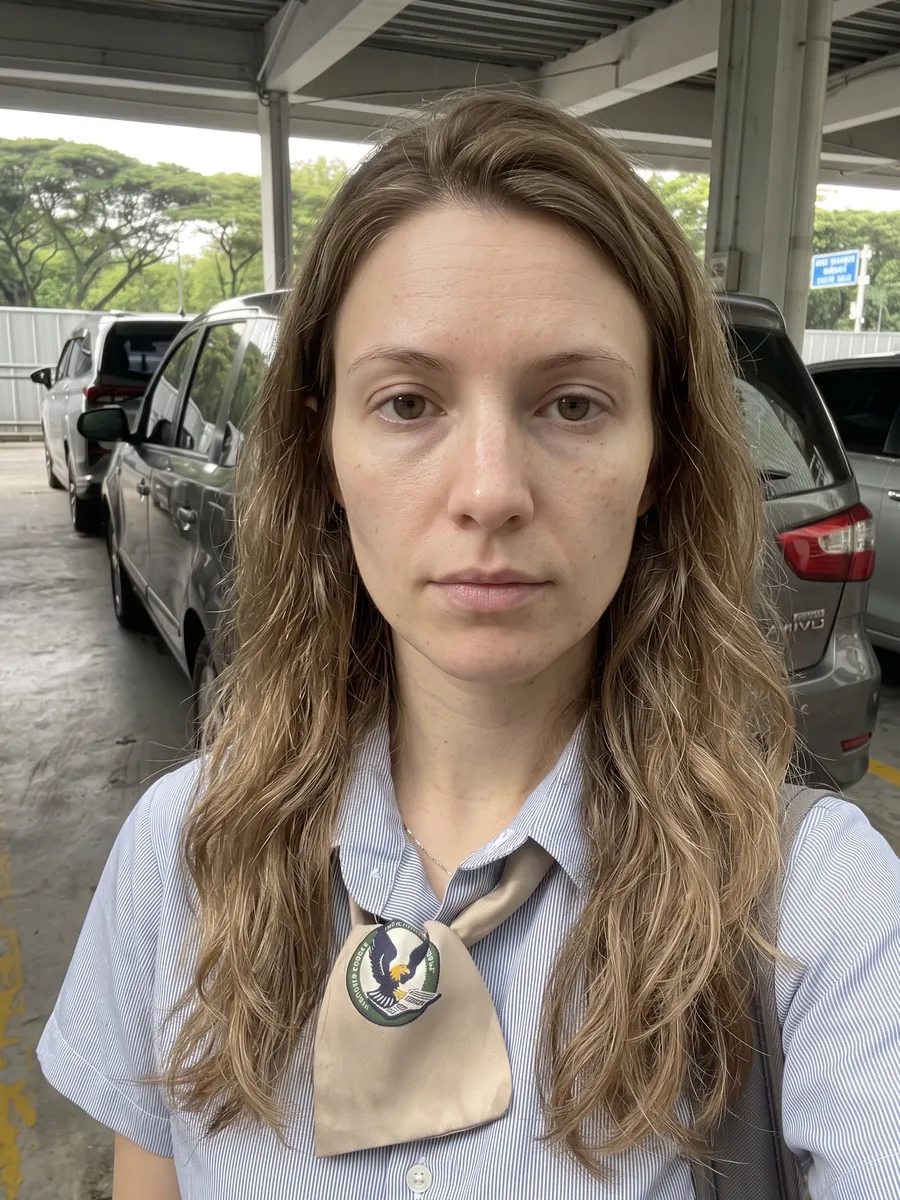
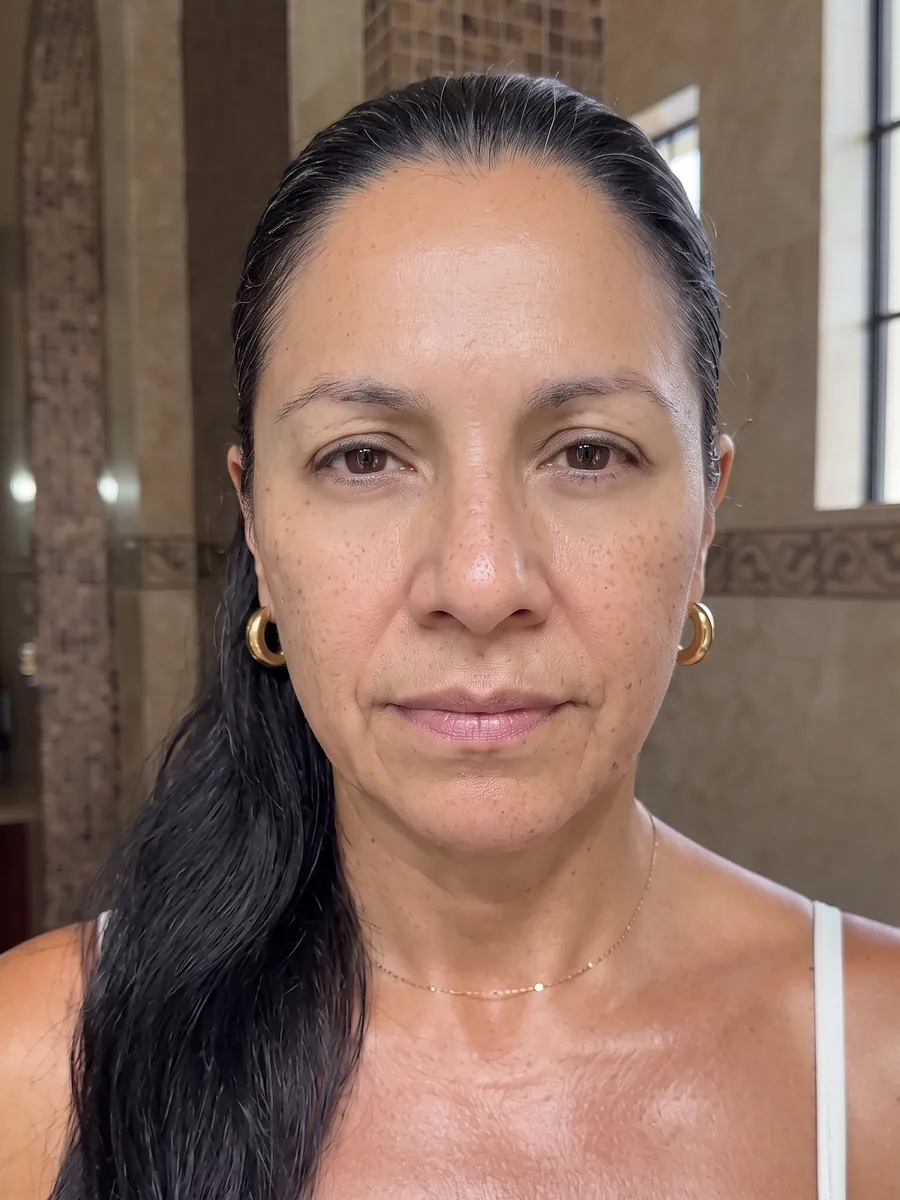
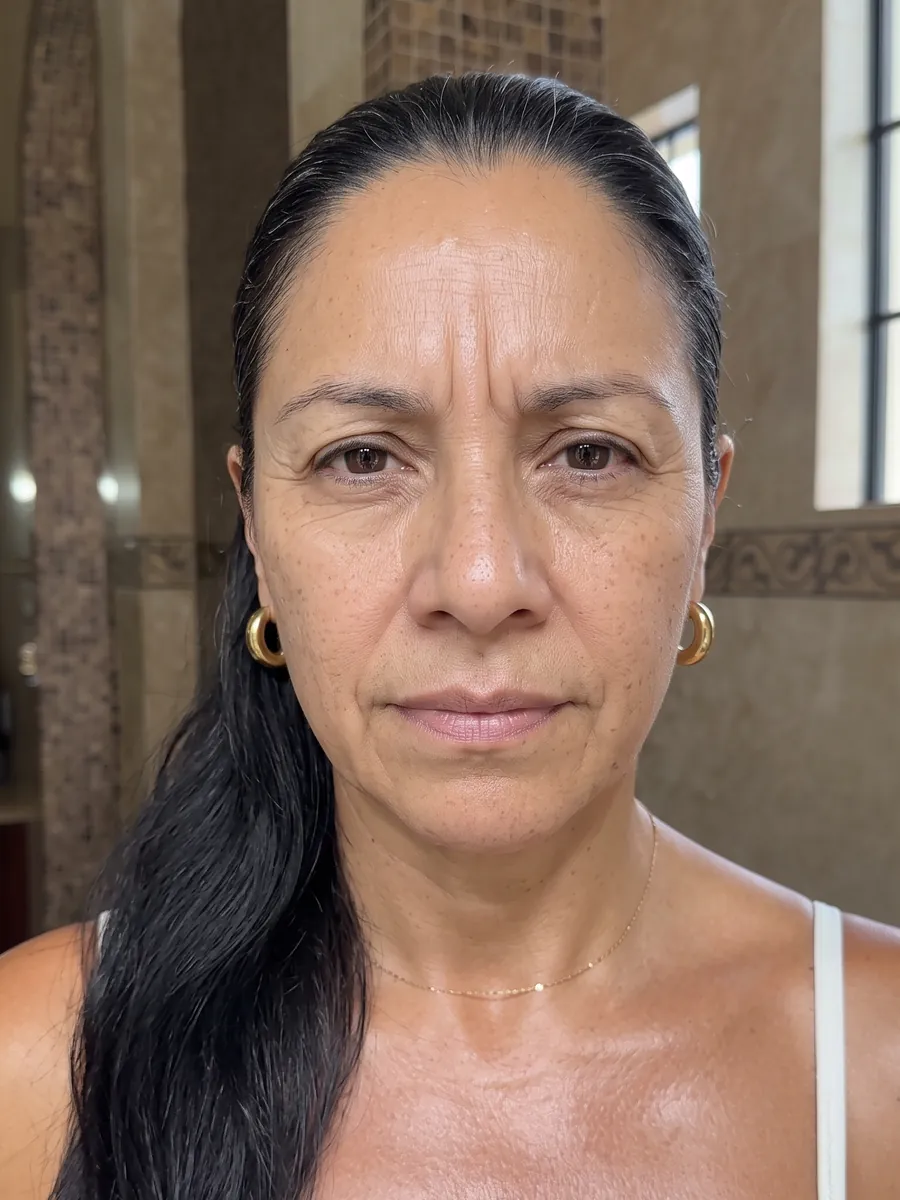
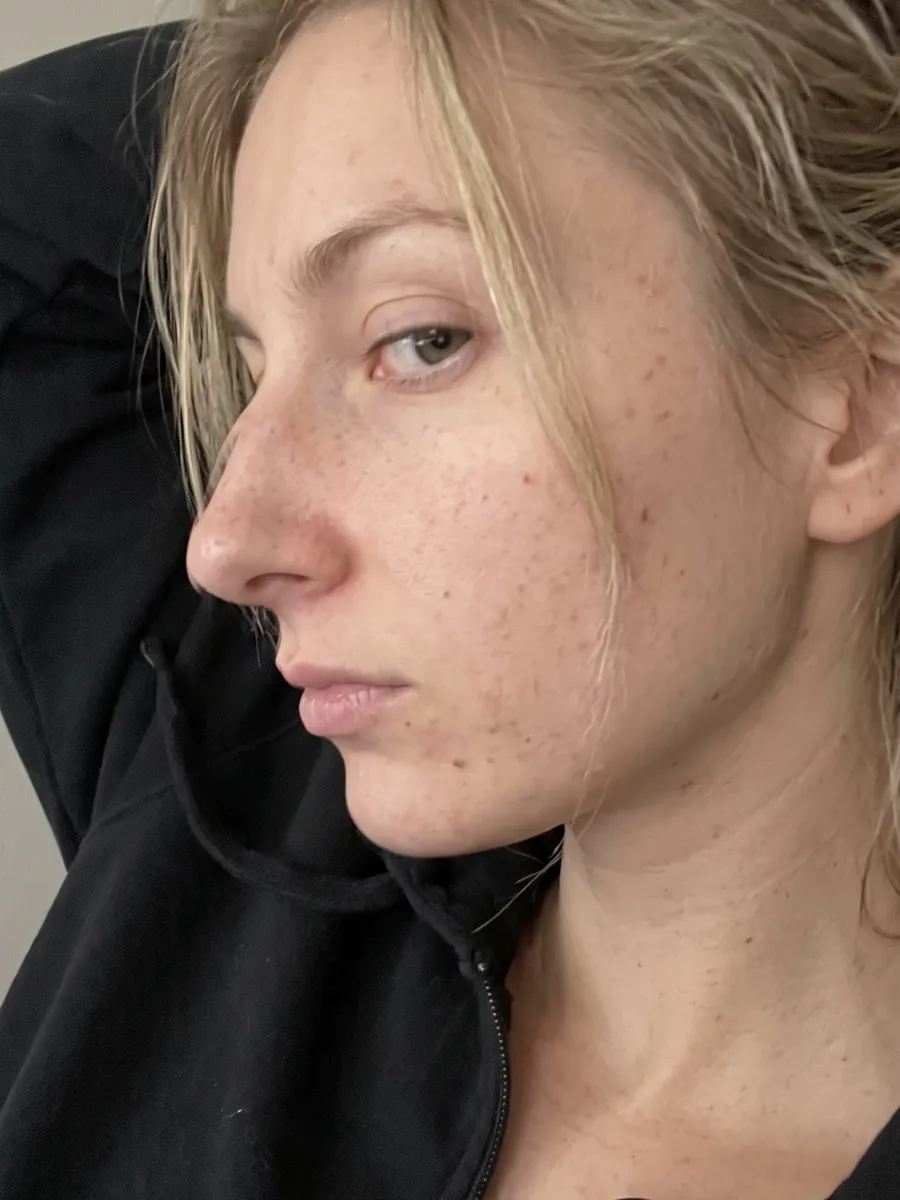
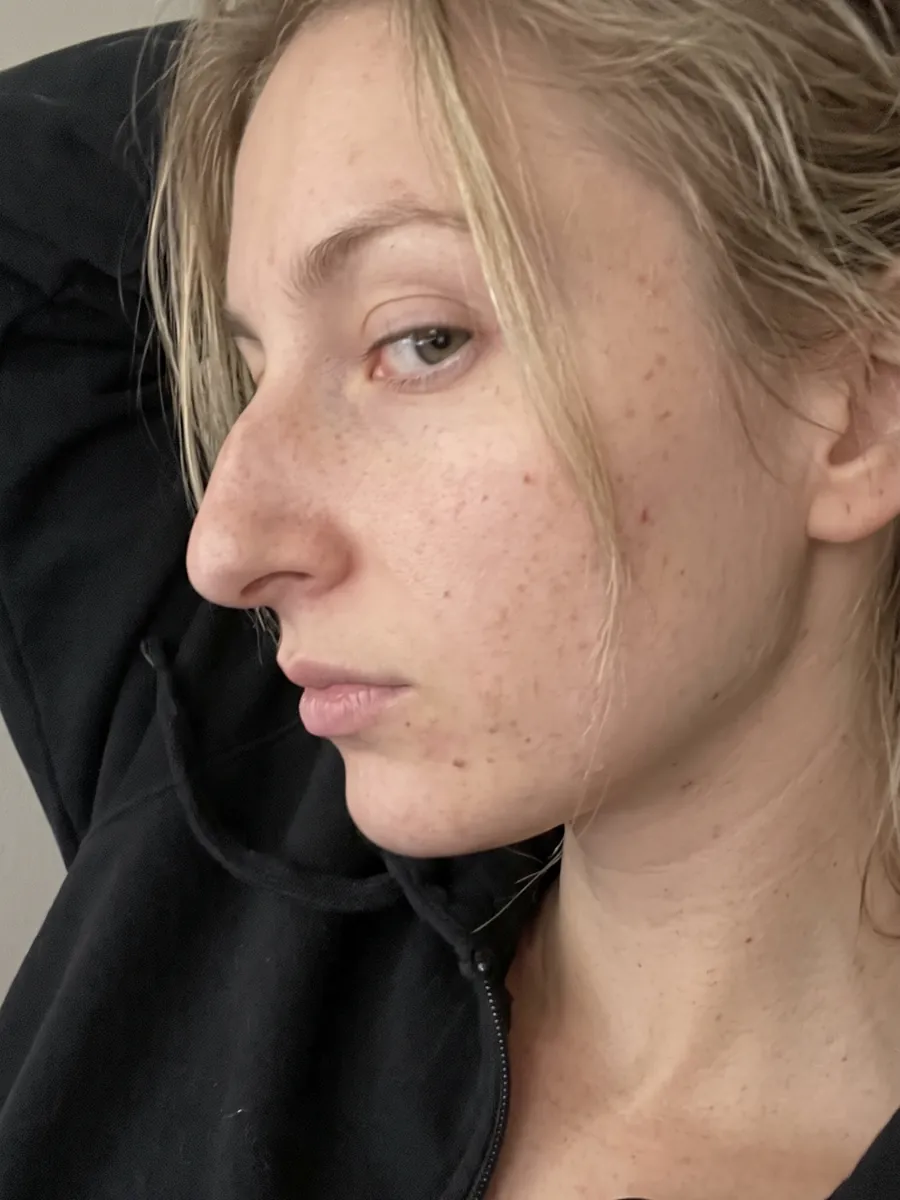
What you'd look like without a double chin, on your own face
By Jérémie Aouate, founder of Mevona. Updated October 22, 2026.
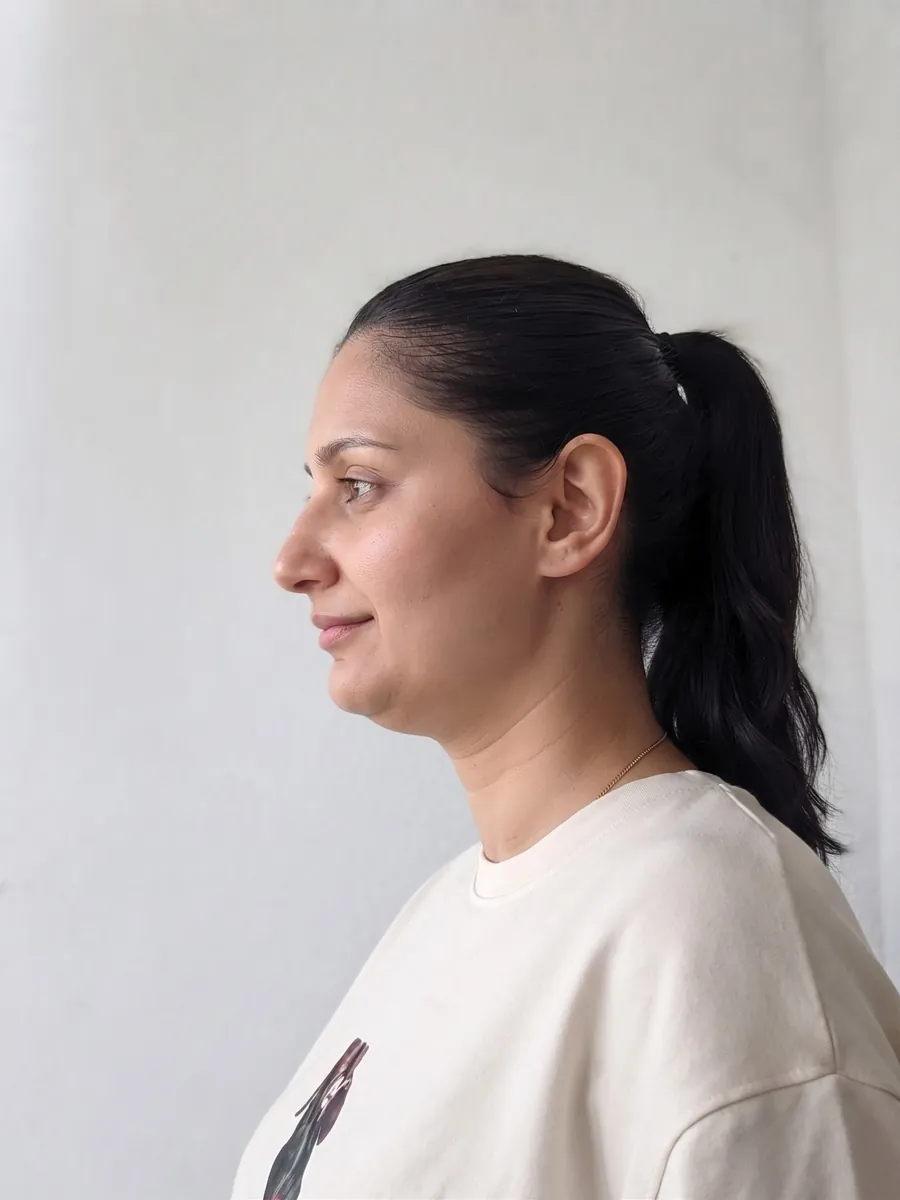
Chin liposuction removes fat from under your chin, the fullness people call a double chin, through a small incision. This page shows what that looks like on one whole face, at three doses, from the front and in profile, and how to see the same thing on your own photos. What you see here is a Cosmetic Preview, an illustration of the kind of change, not a predicted result.
In short
- Chin liposuction, also called submental or double chin liposuction, removes fat under the chin through a port-sized incision, often under local anesthesia when it is done alone, according to a surgeon quoted by the ASPS.
- ASPS member surgeons performed 18,842 chin liposuctions in the US in 2025, 7 percent more than in 2024. Surgeons quoted by the ASPS say age and gender do not rule it out.
- The ASPS describes liposuction results as long lasting provided your weight stays stable. Liposuction does not tighten loose skin, which is the honest limit of this procedure.
- Cleveland Clinic puts cosmetic surgery on the chin and neck at about $1,200 to $12,000 in the US, for procedures from chin liposuction to a neck lift.
- This page shows the area under the chin at three doses on the same photo, from the front and in profile, and what the Facial Dossier reads on the neck before any of it.
What chin liposuction changes
Under your chin, a layer of fat sits between the skin and the thin muscle that covers the front of the neck. When that layer is thick, the line from the chin to the neck rounds out, and in profile the jaw loses its lower edge. Chin liposuction removes fat from that layer with a thin cannula through a small incision, and the skin is left to settle onto the new contour. The ASPS lists the face, cheeks, chin and neck among the areas where liposuction can reduce localized fat.
What moves is the fullness under the chin and along the front of the neck. The chin itself does not move: its projection stays the same, and so do your jaw, your lips, your nose and your expression. Everything else stays. The skin does not get tighter either. The ASPS notes that liposuction cannot tighten lax skin and that people with firm, elastic skin get better results, and a surgeon quoted by the ASPS warns that removing more fat than needed can lead to contour irregularity and loose skin. That is the honest limit of this procedure: the result depends on the skin as much as on the fat.
Photos make this zone tricky. A double chin can appear or disappear with a head tilt of a few degrees, a closer lens, or a change in posture. A fair comparison keeps all of those identical, which is what a preview on a single photo does by construction: the only thing that changes is the fullness under the chin.
In the Facial Dossier, the neck has its own section, number 10 of 17, read on your three photos and closed with one of three verdicts: keep, change, or discuss. The jaw section, number 8, reads your jaw width with guides, which matters here because the lower edge of the jaw is the line that chin liposuction brings back. The Dossier does not measure the fat under the chin in millimeters; the preview is where you see it.
Where you'd stop: subtle, moderate, full
Mevona shows every procedure at three doses on the same photo. They are not surgical plans. They are three distances along the same direction, so you can see where you would want to stop. The names below are the ones you will see in the app.
Subtle: a touch less under the chin
The fullness under the chin is reduced, not gone. From the front, the lower edge of the jaw shows a little more, and in profile the curve from the chin to the neck is shallower. This is the dose to look at if you want to know whether a small change would already be enough on your photo.
Moderate: a cleaner chin line
Most of the fullness under the chin is gone, and in profile the line from the chin to the neck reads as a line rather than a curve. From the front, the jaw has a visible lower edge on both sides. The face still reads as the same person, with the same chin.
Full: the sharpest chin line
The area under the chin is flat, and the angle between the chin and the neck is at its most defined. In profile, this is the largest change the preview shows in one pass. It assumes the skin follows the new contour, which is the first thing to check against your own skin.
Surgeons do not work in doses, and liposuction is not counted in units. The nearest real-world count sits on the nonsurgical side. In the two phase 3 studies behind the FDA approval of deoxycholic acid (Kybella), 66.5 to 70.0 percent of the people who received it improved by at least one grade on five-point scales of fullness under the chin, 12 weeks after their last session, and 13.4 to 18.6 percent improved by at least two grades, according to the FDA label. As an indicative anchor only, a one-grade change is closer to the subtle dose than to the full one. The three doses are a way of looking, not a menu. What is achievable under your chin is a conversation to have with a qualified professional, with your photos and the preview in hand if you like.
Front and profile
Chin liposuction is the procedure where the two views disagree the most. From the front, part of the fullness under the chin hides behind the jaw and in shadow, and what you see is mostly the lower edge of the face. In profile, the line from the chin to the neck is drawn against the background, and every bit of fullness changes it. The profile is the view of truth for this zone.
The main visual on this page is the front, because it is the view of your face you see most, in a mirror and on a screen. The page shows both, and Mevona asks for three photos, one from the front and one from each side, for that reason. Look at the profile first to see how much the line changes, then at the front to see whether you would notice it day to day.
Techniques and variants
Fat under the chin can be reduced in a few ways, and only some of them also deal with skin:
- Submental liposuction. Fat removed with a thin cannula through a small incision under the chin. A surgeon quoted by the ASPS describes a port-sized incision of about 3 mm, local anesthesia when it is done alone, and a handheld device rather than a powered one.
- Energy-assisted liposuction. Some techniques add ultrasound energy. The ASPS lists thermal burns or heat injury among the risks specific to ultrasound-assisted liposuction.
- Chin tuck (submentoplasty). Cleveland Clinic describes it as a procedure focused on the chin and upper neck that tightens skin as well as removing extra fat.
- Neck lift. More extensive than a chin tuck, according to Cleveland Clinic: it removes excess skin and tightens the muscles. See neck lift.
- Deoxycholic acid (Kybella). A prescription drug placed into the fat under the chin over a series of sessions, which destroys fat cells, according to Cleveland Clinic. The comparison is below.
The three doses on this page illustrate liposuction alone: less fat under the chin, with the skin and the muscle of the neck as they are. A chin tuck or a neck lift changes more than the fat, and the neck lift page shows that change on its own doses.
Who usually considers it
People arrive at this page from a few starting points: fullness under the chin that shows in side photos, a jawline that has lost its lower edge, a double chin that stayed after weight loss, or a profile that looks heavier on video calls than in the mirror. Surgeons quoted by the ASPS say age and gender do not rule chin liposuction out, and that the decision rests on skin quality, fat distribution and facial anatomy. The ASPS also notes that liposuction is not a way to lose weight or a substitute for diet and exercise, and that firm, elastic skin gives better results; when the skin is loose, one of those surgeons recommends a neck lift instead.
None of that says whether chin liposuction is right for a given neck. That is not something a page or a preview can tell you. What a preview can do is show you the direction and the distance, so that when you discuss it with a qualified professional, you already know which dose you were picturing and which view it changes most. The concern page goes deeper on where to start: double chin.
Chin liposuction vs Kybella
| Chin liposuction | Kybella (deoxycholic acid) | |
|---|---|---|
| What it is | Surgery: fat removed with a cannula through a small incision under the chin | A prescription drug placed into the fat under the chin, which destroys fat cells, per Cleveland Clinic |
| What it can do | Reduce localized fat under the chin and on the neck, according to the ASPS | Reduce moderate to severe fullness from fat under the chin, the use the FDA approved |
| What it cannot do | Tighten lax skin, according to the ASPS | Help with significant excess skin, per Cleveland Clinic; its use on fat outside the area under the chin is not established, per the FDA label |
| Sessions | One operation | Up to six sessions at least a month apart, per the FDA label; 59 percent of people in the pivotal studies received all six |
| How long it lasts | Long lasting with a stable weight, according to the ASPS | Fat cells destroyed do not regenerate, according to Cleveland Clinic |
| Recovery | Back to work within a week or two per Cleveland Clinic; most swelling gone by four to six weeks per the ASPS | Redness, swelling, bruising and numbness, temporary and lasting fewer than four weeks, per Cleveland Clinic |
| Reversibility | Not reversible | Not reversible |
| Risks named by the source | ASPS: irregular contours or asymmetries, fluid accumulation, changes in skin sensation, nerve damage, loose skin, revision | FDA label: marginal mandibular nerve injury (an asymmetric smile), difficulty swallowing, bruising in 72 percent |
The preview on this page illustrates liposuction. Deoxycholic acid works gradually, over sessions a month or more apart, which is why the section above uses it only as an indicative anchor for the lower doses. Both options, and a neck lift, are compared on chin lipo vs Kybella vs neck lift.
Cost, recovery, risks
Cost
| Typical range | $1,200 to $12,000 |
|---|---|
| Source | Cleveland Clinic range for cosmetic surgery on the chin and neck, from chin liposuction to a neck lift, page updated 2021; ASPS average surgeon fee for liposuction of all body areas $4,711, which excludes anesthesia and facility fees |
Indicative. A quote depends on the technique, the city and the practice.
Cleveland Clinic puts cosmetic surgery on the chin and neck at about $1,200 to $12,000 in the US, a range that spans the procedures it groups under double chin surgery, from chin liposuction to a neck lift. The page was last updated in 2021. The ASPS reports an average surgeon fee of $4,711 for liposuction as a whole, all body areas together, and that figure excludes anesthesia, operating room facilities and other related expenses. The ASPS does not publish a separate fee for the chin. With deoxycholic acid, the total depends on how many sessions you have.
Recovery
- Day 0Often done under local anesthesia when it is the only procedure, through a port-sized incision of about 3 mm under the chin, according to a surgeon quoted by the ASPS. Cleveland Clinic puts chin and neck procedures at 45 minutes to a few hours, depending on what is done.
- Week 1A visible improvement in contour within the first week, according to the ASPS. A chin strap may support the skin while it heals, per Cleveland Clinic.
- Week 1 to 2Discomfort, swelling and bruising last about two weeks, and most people go back to work and daily activities within a week or two, according to Cleveland Clinic.
- Week 4 to 6The majority of the swelling subsides by about four to six weeks, according to the ASPS.
- Month 3Collagen remodeling and skin tightening continue for several months, with the most refined result around the three-month mark, according to the ASPS.
Two sources frame the timeline. Surgeons quoted by the ASPS describe a visible improvement in contour within the first week, most of the swelling gone by about four to six weeks, and the most refined result around three months, as collagen remodeling and skin tightening continue. Cleveland Clinic puts discomfort, swelling and bruising at about two weeks and the return to work and daily activities within a week or two, and mentions a chin strap that may support the skin while it heals. The ASPS liposuction pages add that swelling can take several months to resolve fully.
Risks
The ASPS lists the known risks of liposuction: anesthesia risks, bruising, swelling, infection, fluid accumulation, irregular contours or asymmetries, rippling or loose skin, changes in skin sensation that may persist, damage to deeper structures such as nerves and blood vessels, irregular pigmentation, poor wound healing, deep vein thrombosis with cardiac and pulmonary complications, and the need for revision surgery. Cleveland Clinic adds, for surgery on the chin and neck, hematoma, nerve injury causing numbness or weakness, scarring and skin discoloration. For deoxycholic acid, the FDA label describes injury to the marginal mandibular nerve as an asymmetric smile or facial muscle weakness, and reports that all such cases in its studies resolved on their own, with a median of 44 days.
A 2026 systematic review of 13 studies and 2,085 submental liposuctions counted adverse events at 12.9 percent per procedure, about three quarters of them minor; the most frequent were seromas, skin surface irregularities or asymmetries, and visible bands of the neck muscle. Your own risk depends on your anatomy, your skin and the procedure planned, and belongs in a consultation with a qualified professional. Cosmetic Previews are illustrative and do not predict the result of any procedure.
Often combined with
Two combinations come up often enough that Mevona previews them on the same photo:
- Neck lift. When the skin under the chin is loose, a surgeon quoted by the ASPS recommends a neck lift rather than liposuction alone, and Cleveland Clinic describes the neck lift as the procedure that removes excess skin and tightens the muscles. See neck lift.
- Chin augmentation. In profile, the chin and the area under it read as one line: a chin that sits back shortens the distance to the neck, so the same fullness looks larger. Previewing a little more projection next to less fat shows which of the two changes the line more on your photo. See chin augmentation.
The combination previews use the moderate dose of each procedure, from the front.
Send three photos from your phone, front and both sides, in your own light. Pick chin liposuction and a dose, and see the fullness under your chin go down while your chin, your jaw and the rest of your face stay yours. Check the profile, then the front, then put the moderate dose next to a neck lift or chin augmentation on the same photo. Your Facial Dossier follows within 24 hours, with the neck and jaw sections read. One membership, $99 a year, all 29 procedures. Take your time, then decide.