Rhinoplasty before and after, on your own face
By Jérémie Aouate, founder of Mevona. Updated October 22, 2026.
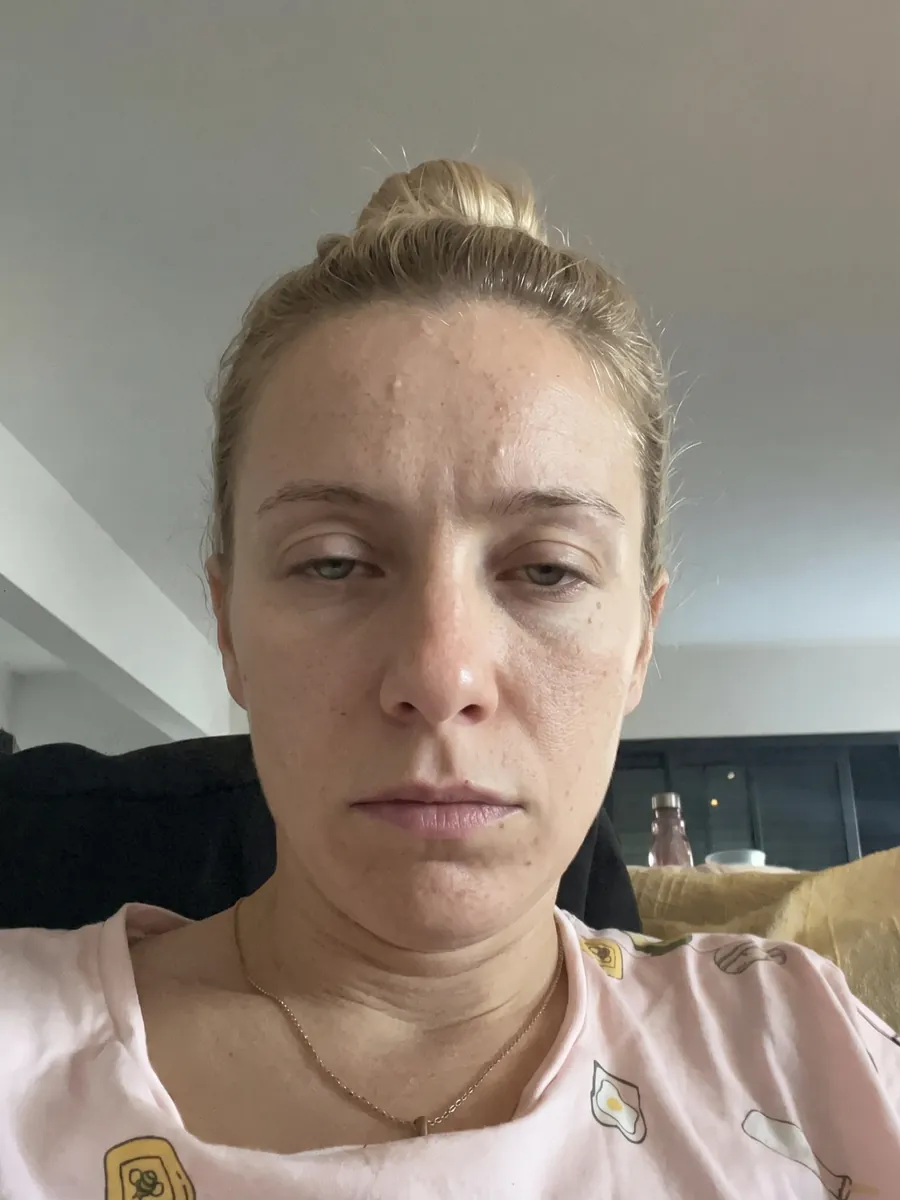
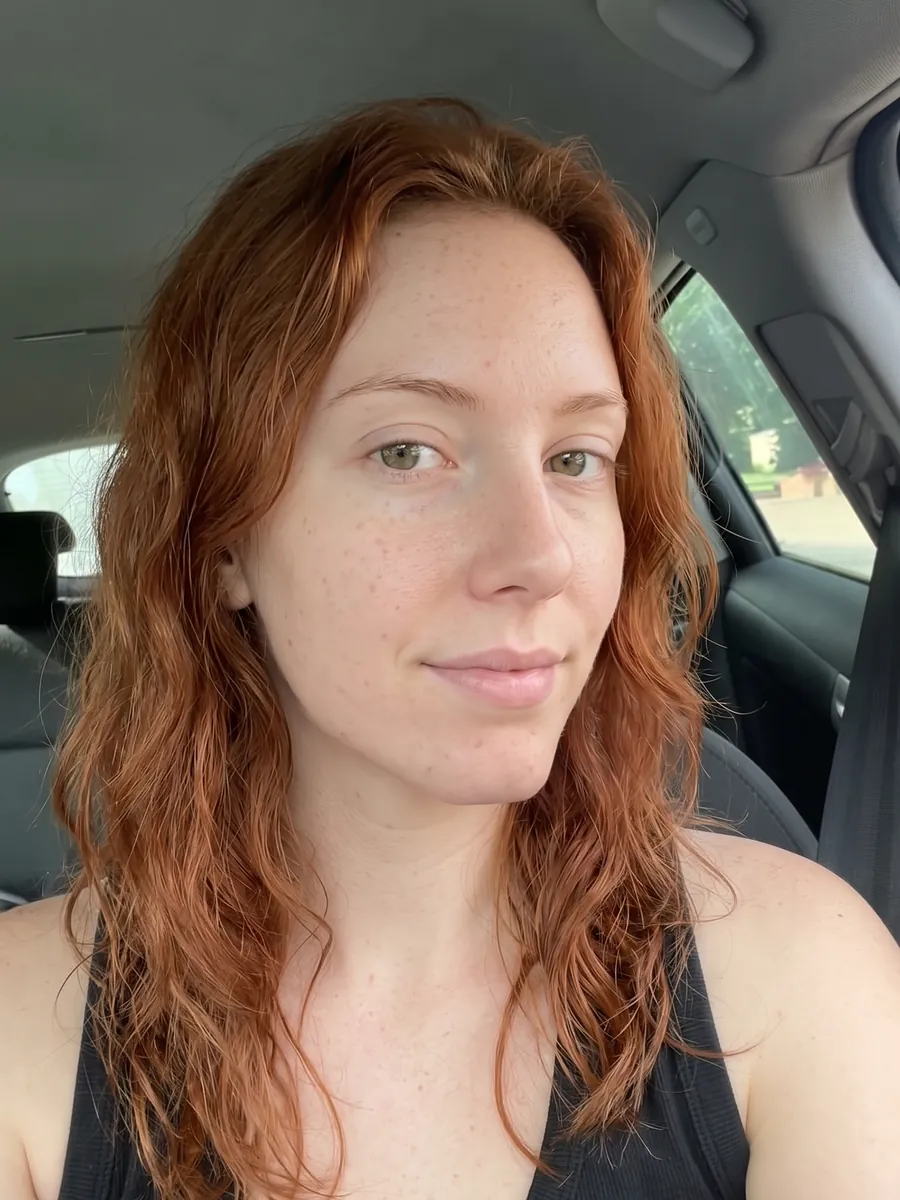
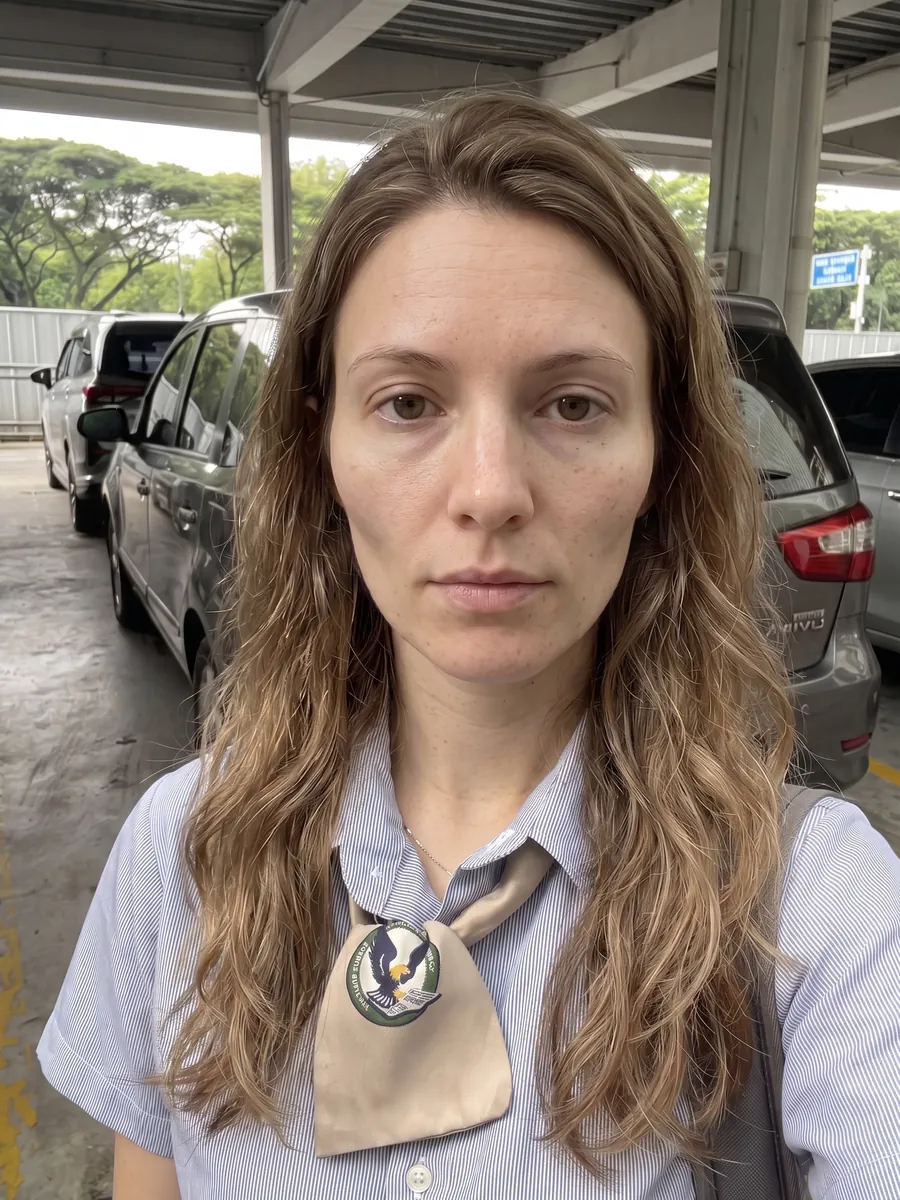
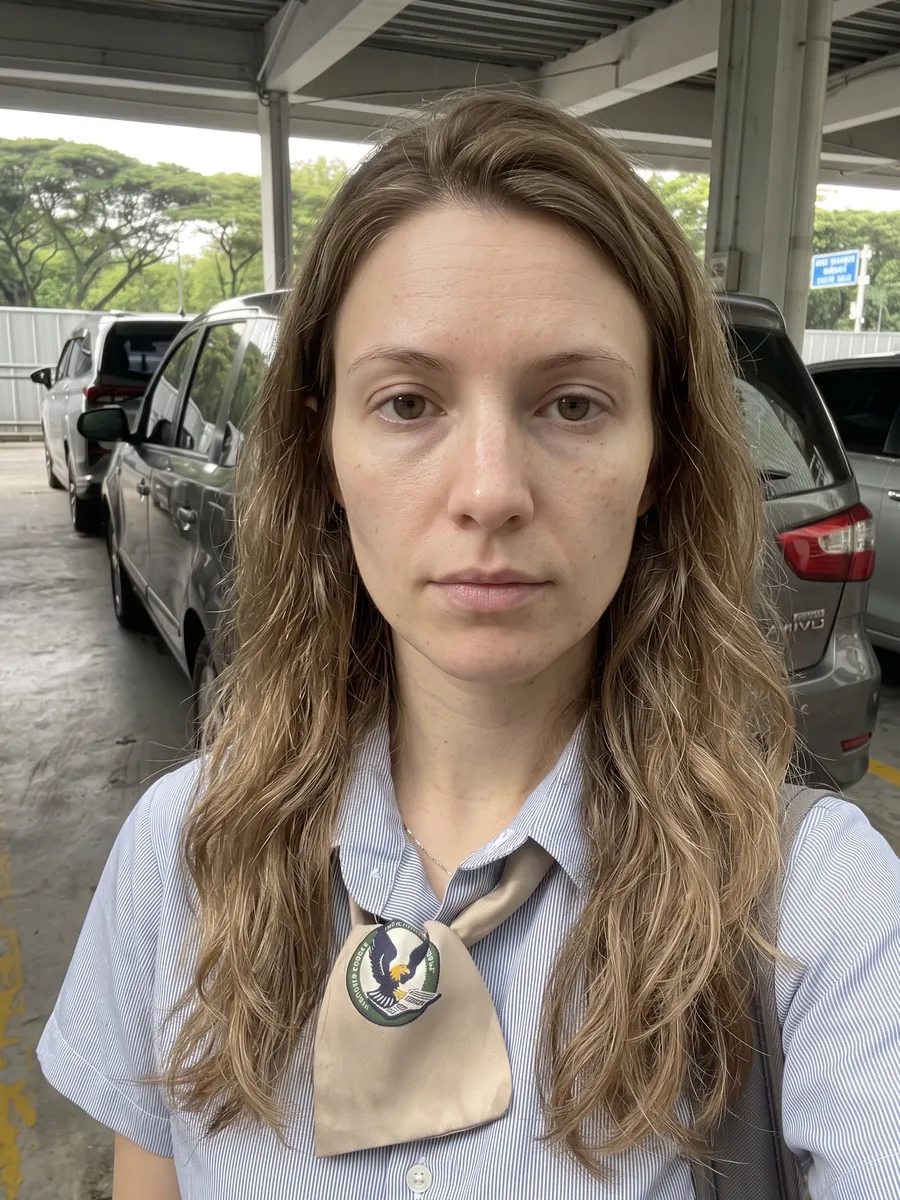
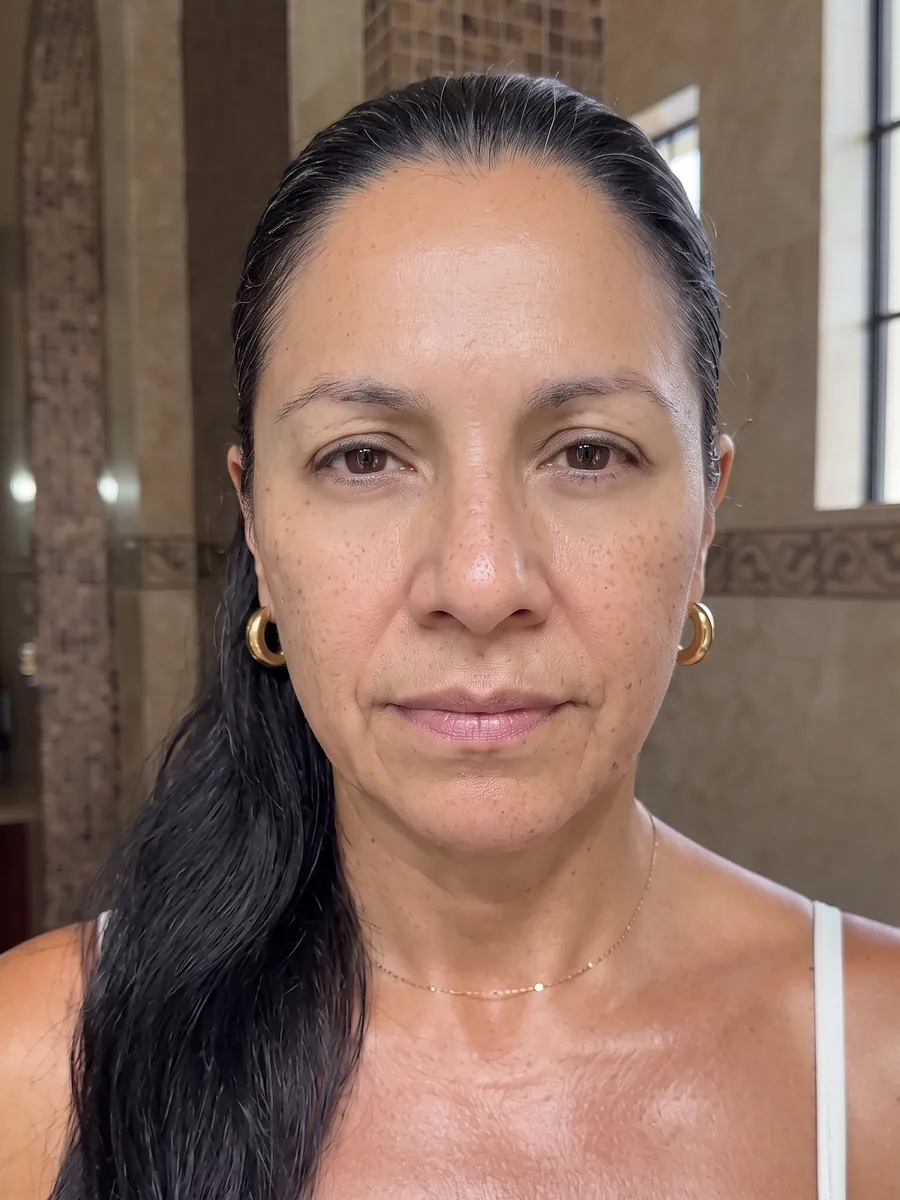
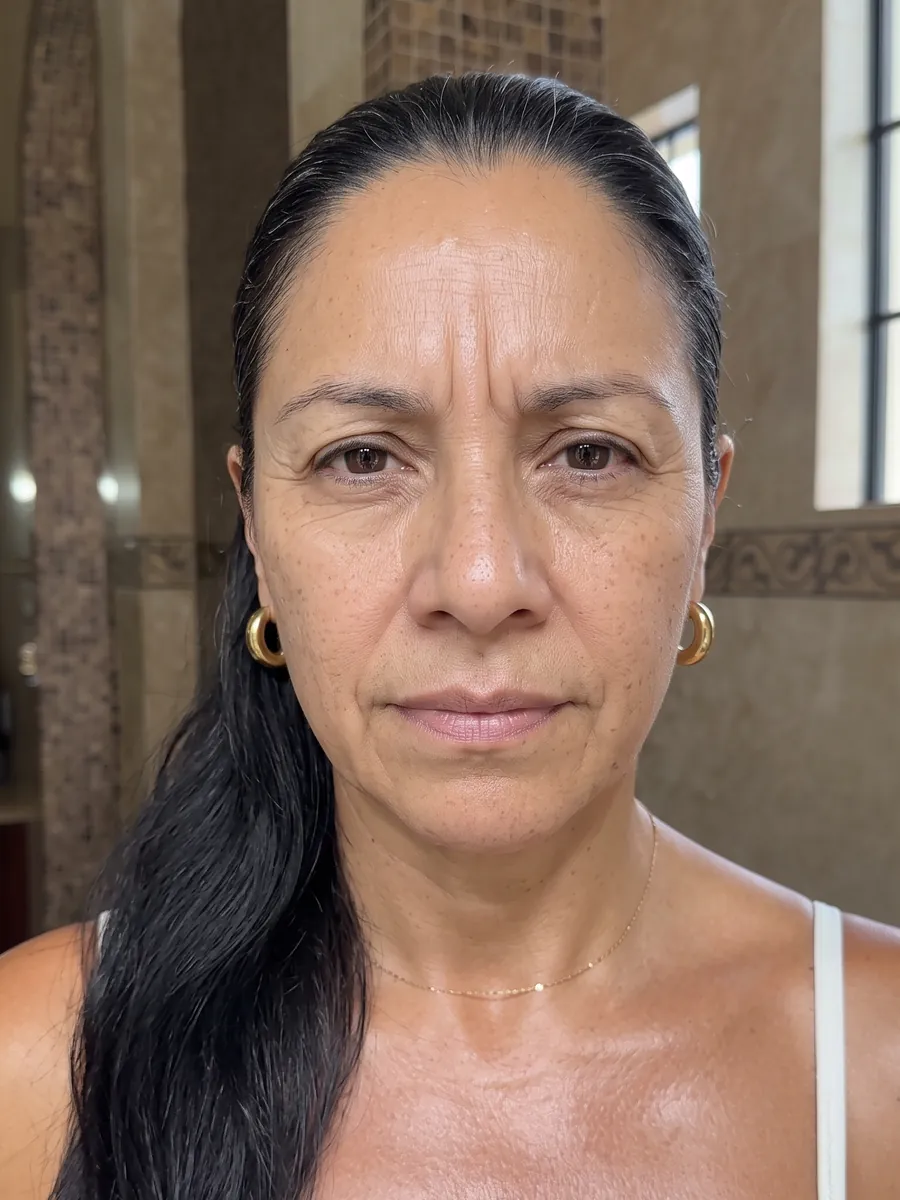
A rhinoplasty changes the shape of your nose: the line of the bridge, the tip, the width, sometimes the nostrils. This page shows what that looks like on a whole face, at three doses, from the front and in profile, and how to see the same thing on your own photos. What you see here is a Cosmetic Preview, an illustration of the kind of change, not a predicted result.
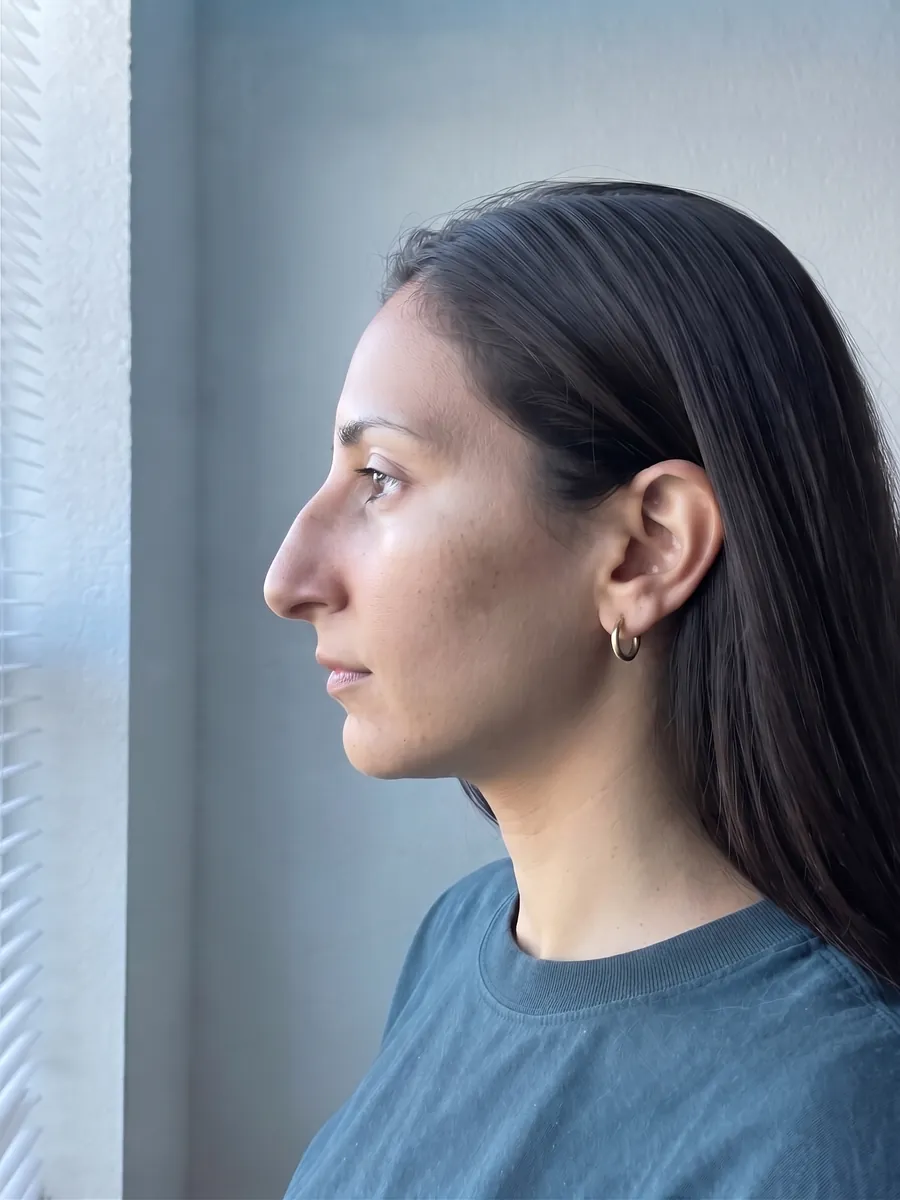
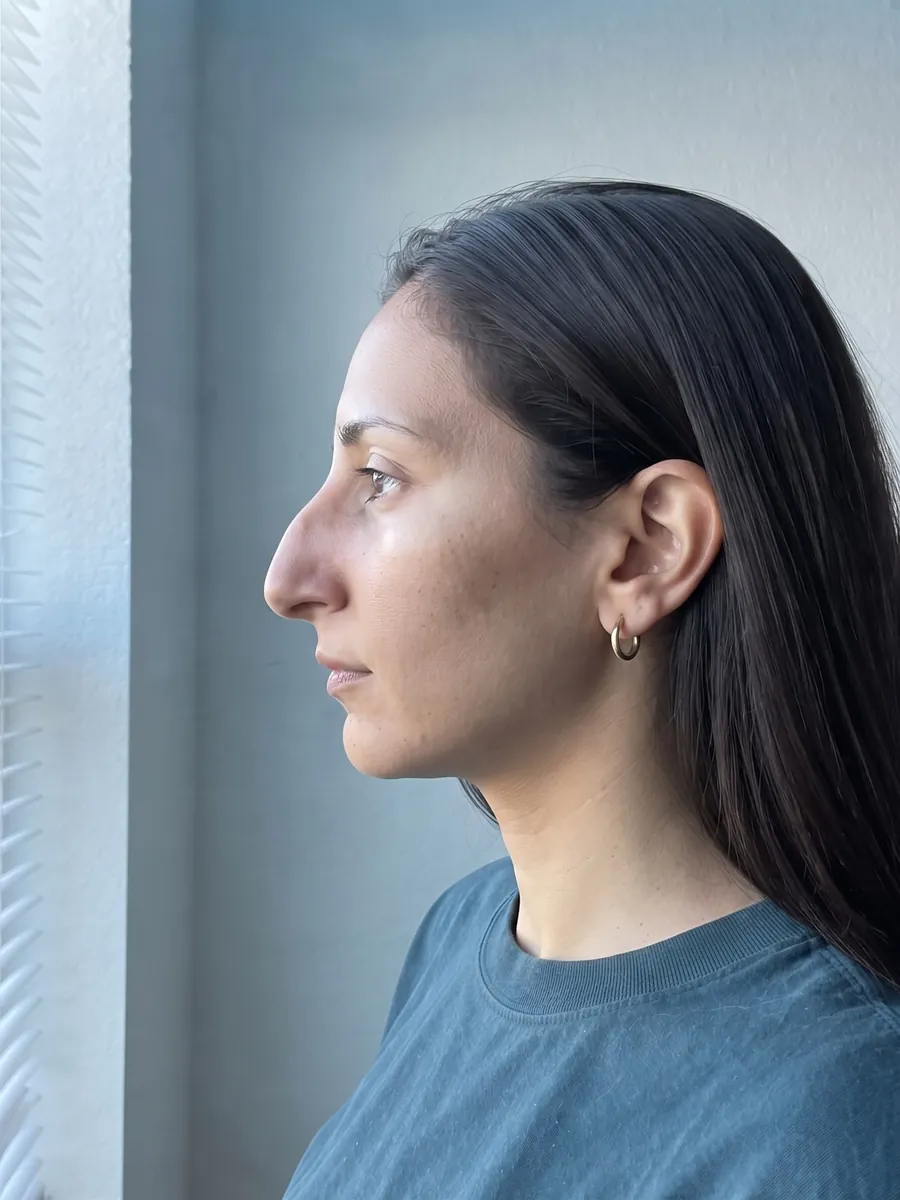
In short
- Rhinoplasty can change the size of the nose relative to the face, the width at the bridge or the nostrils, the profile line, the tip and asymmetry, according to the ASPS. It can also be combined with septal work to help breathing.
- It is the fifth most common surgical procedure in the world, with about one million performed in 2024 according to the ISAPS global survey, and 43,116 by ASPS member surgeons in the US in 2025.
- The change is permanent. The swelling is not: most of it is gone by three months, the tip settles over up to a year.
- Average US surgeon fee: $7,637 according to the ASPS, before anesthesia and facility fees. Community-reported totals on RealSelf run from $5,000 to $25,000.
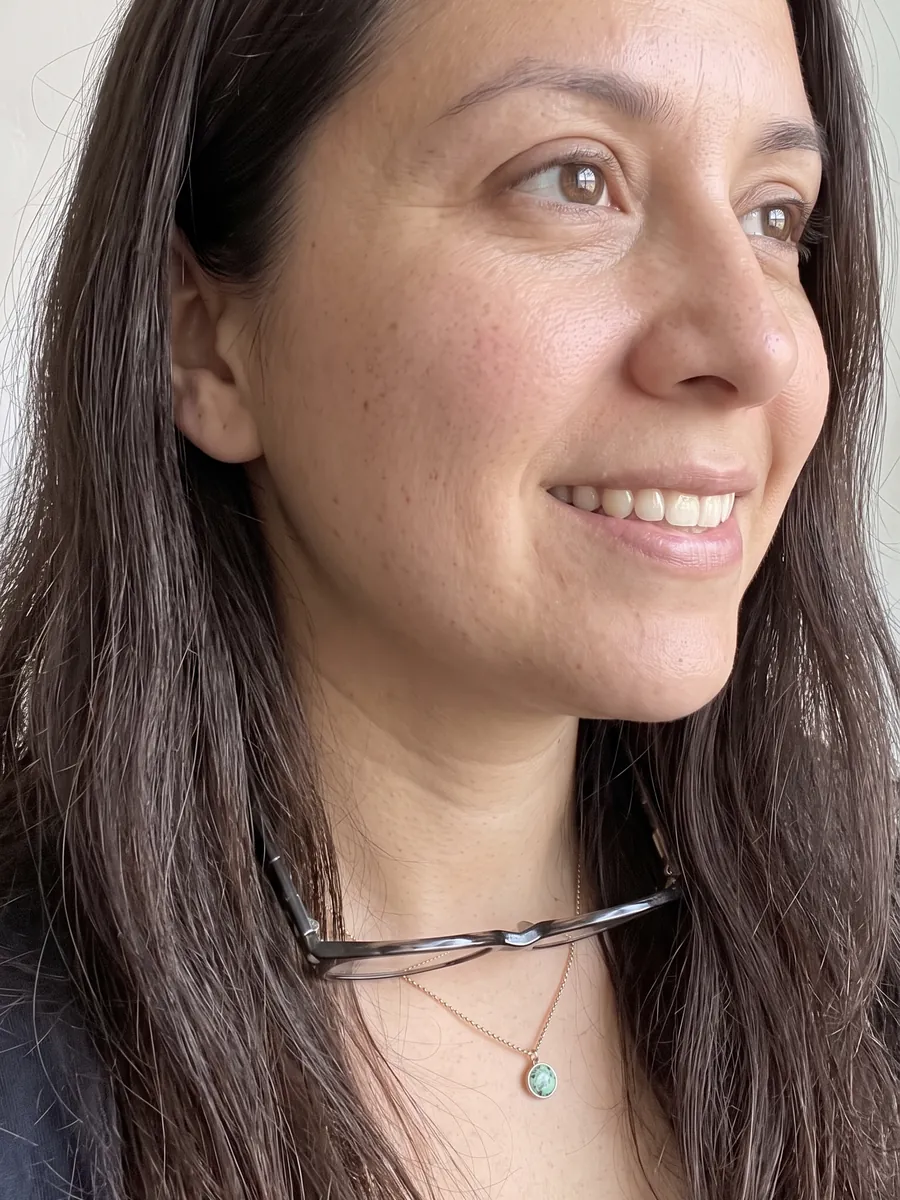
- This page shows Yasmin's rhinoplasty at three doses, in profile and from the front, and what the Facial Dossier measures on the nose before any of it.
What rhinoplasty changes
Your nose has a bony upper third, a cartilage lower two thirds, and skin of a given thickness draped over both. A rhinoplasty works on the framework underneath that skin. According to the ASPS, that lets a surgeon change the size of the nose in relation to the rest of the face, the width at the bridge, the position and size of the nostrils, a visible rise or dip in the profile, a tip that is enlarged, drooping, upturned or hooked, and asymmetry between the two sides. When breathing is part of the picture, the same operation can include work on the septum, the wall between the two nasal passages.
What rhinoplasty does not change matters as much. The skin keeps its thickness, and thick skin shows fine changes at the tip less clearly, which is why the Cosmetic Preview on this page moves the line of the bridge first and the tip second. Your eyes, your lips, your cheeks and your expression stay as they are. If anything else looks different in a before and after, something other than the nose has moved: the light, the angle, the make-up, or the camera distance. A fair comparison keeps all of those identical, which is what a preview on a single photo does by construction.
In the Facial Dossier, the nose has its own section, number 5 of 17. On your front photo it measures nose width in millimeters and the nose width-to-height ratio, and reads nostril show, alar width, bridge breadth and tip contour. The section ends with one of three verdicts: keep, change, or discuss. That reading comes before any preview, so you know what you are starting from.
Where you'd stop: subtle, moderate, full
Mevona shows every procedure at three doses on the same photo. They are not surgical plans. They are three distances along the same direction, so you can see where you would want to stop. The names below are the ones you will see in the app.
Subtle: a softer line at the bridge
The rise on the bridge is reduced, not removed. In profile the line from the top of the nose to the tip reads smoother, with a slight remaining curve. From the front, almost nothing changes. This is the dose most people point to when they say they want something nobody would notice, and it is the one that is hardest to see in a photo taken from the front.
Moderate: the rise mostly gone
The profile line is close to straight, with a hint of the original curve left. The tip gains a little definition because the bridge no longer competes with it. From the front, the bridge reads a touch narrower because the light now falls along one plane instead of two. This is the dose where the nose starts to look different and the face still reads as the same person.
Full: a straight bridge
The profile line is straight from the top of the nose to the tip, and the tip is defined. From the front, the width at the bridge is at its narrowest. This is the largest change the preview shows in one pass, and the one to look at when you want to know whether a straight line suits the rest of your profile, especially the chin.
Surgeons do not work in doses. They remove or add millimeters of bone and cartilage, and the amount depends on your anatomy. The three doses are a way of looking, not a menu. What is achievable on your nose is a conversation to have with a qualified professional, with your photos and the preview in hand if you like.
Front and profile
Rhinoplasty is the procedure where the angle decides what you see. The rise on the bridge, the slope of the tip and the angle between the nose and the upper lip live in the profile. The width of the bridge, the width of the nostrils and asymmetry live in the front view. A before and after that only shows one angle is telling half the story.
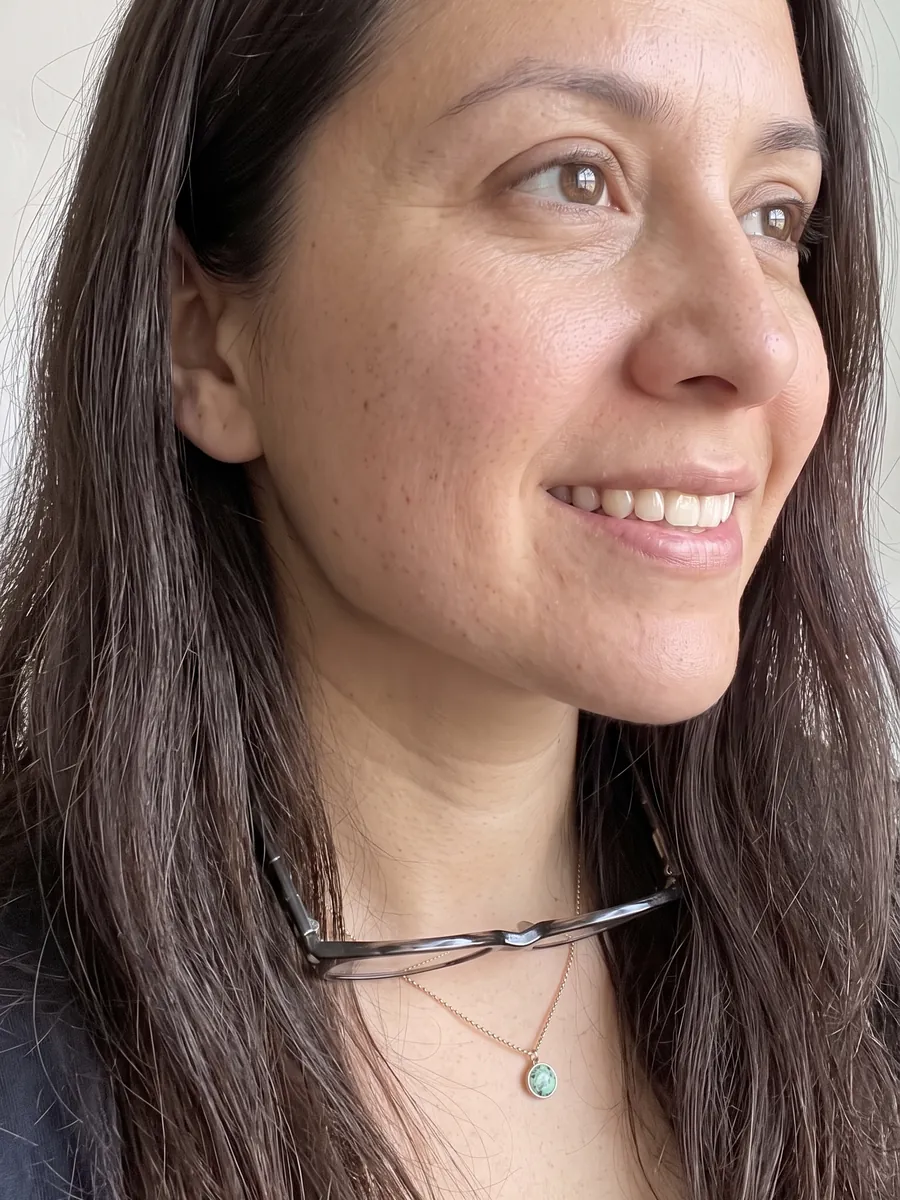
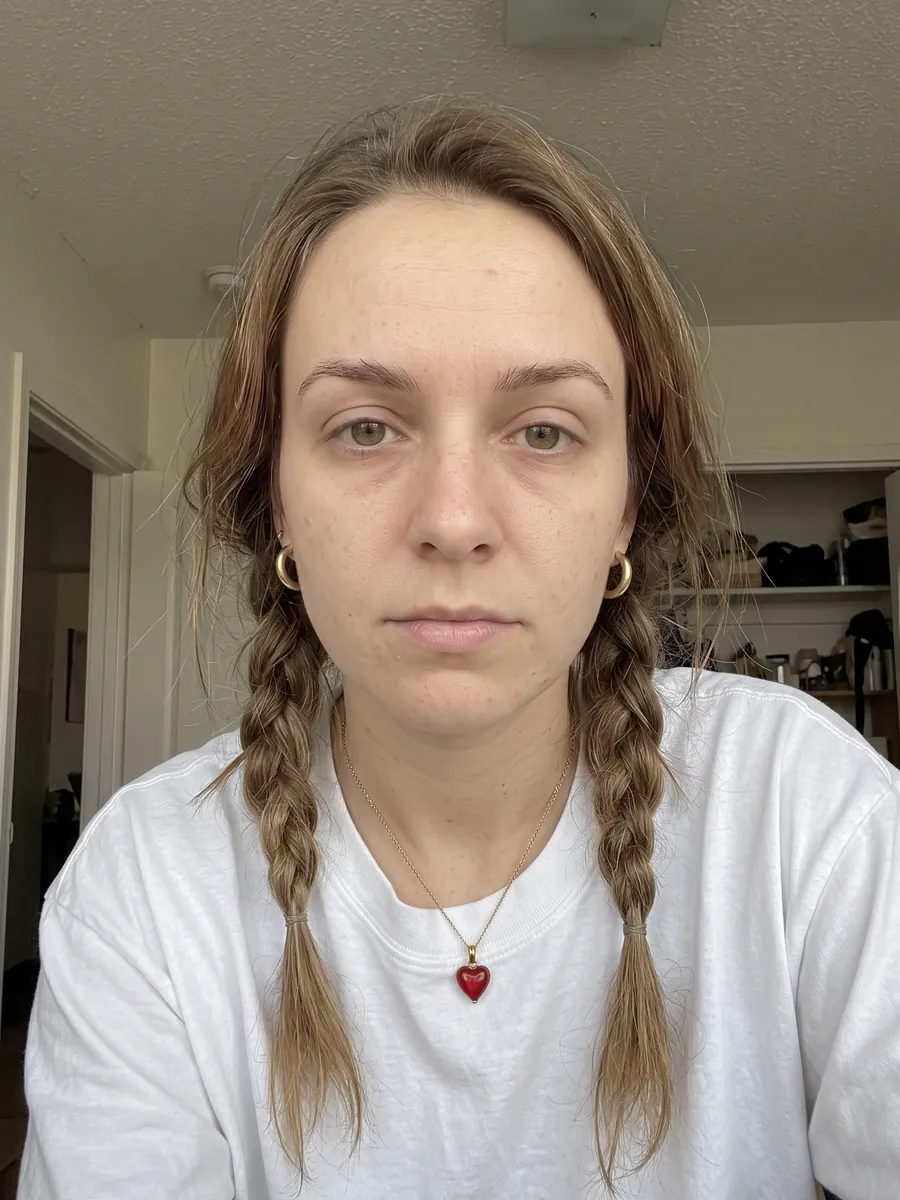
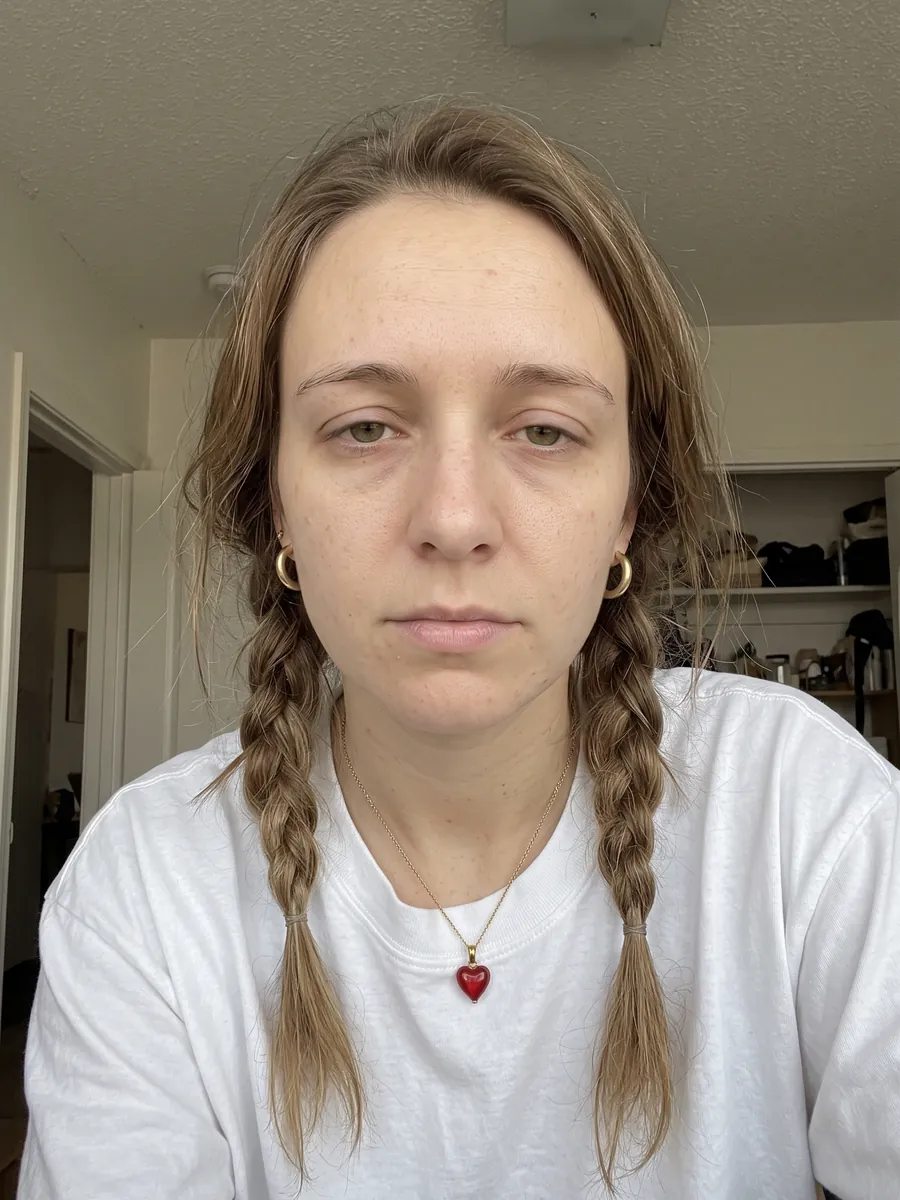
That is why Mevona asks for three photos, one from the front and one from each side, and why the main visual on this page is the profile. Look at the profile first for the bridge and the tip, then at the front view to check that the width still fits the distance between your eyes. On Yasmin's photos the full dose reads as a clear change in profile and as a small one from the front, which is typical of a bridge-focused rhinoplasty.
Techniques and variants
Rhinoplasty is a family of operations rather than one. The most common distinctions:
- Closed rhinoplasty. All incisions sit inside the nostrils. Cleveland Clinic describes it as the approach for smaller changes, with no visible scar.
- Open rhinoplasty. A short incision across the columella, the strip of skin between the nostrils, lets the surgeon lift the skin and see the whole framework. Cleveland Clinic describes it as the approach for larger changes.
- Dorsal hump reduction. The rise on the bridge is lowered. This is the change the three doses on this page illustrate. See dorsal hump.
- Tip work. The cartilages of the tip are narrowed, lifted or defined, with the bridge left alone. It has its own page: nasal tip refinement.
- Alar base reduction. The nostrils are narrowed at the base, sometimes alongside the rest.
- Septorhinoplasty. Cosmetic work and septal work in the same operation when breathing is part of the goal.
- Revision rhinoplasty. A second operation on a nose that has already been operated on. In a cohort of 175,842 septorhinoplasties in three US states, the revision rate was 3.3 percent overall and 11 percent when the first operation was itself a revision.
- Nonsurgical rhinoplasty. Filler placed around a rise on the bridge or at the tip. Different in what it can do and how long it lasts; see the comparison below.
Who usually considers it
People arrive at this page from a few starting points: a visible rise on the bridge in profile, a tip that droops when they smile, a nose that reads wide in photos, asymmetry after an injury, or breathing that has been poor for years. The ISAPS survey reports that 60.1 percent of rhinoplasties worldwide in 2024 were on people aged 18 to 34.
None of that says whether rhinoplasty is right for a given face. That is not something a page or a preview can tell you. What a preview can do is show you the direction and the distance, so that when you discuss it with a qualified professional, you already know which dose you were picturing and which angle it shows best. The concern pages go deeper on each starting point: dorsal hump to begin with.
Rhinoplasty vs nonsurgical rhinoplasty
| Rhinoplasty | Nonsurgical rhinoplasty | |
|---|---|---|
| What it is | Surgery on the bone and cartilage | Filler placed under the skin of the nose |
| What it can do | Reduce, straighten, narrow, lift, add; address breathing with septal work | Fill around a rise so the profile reads straighter; add definition at the tip, according to the ASPS |
| What it cannot do | Make the nose smaller, remove anything, or help breathing | |
| How long it lasts | Permanent, once healed | Months, then it needs repeating |
| Recovery | Splint for one to two weeks, swelling for months | Minimal downtime |
| Reversibility | Not reversible | Hyaluronic acid filler can be dissolved |
| Risks named by the ASPS | Anesthesia, infection, scarring, septal perforation, breathing changes, revision | Rare but serious: skin necrosis, blindness |
The preview on this page illustrates the surgical change. Filler on the bridge produces a different shape, usually a slightly higher and straighter line rather than a lower one.
Cost, recovery, risks
Cost
| Typical range | $5,000 to $25,000 |
|---|---|
| Source | RealSelf community-reported range, read 2026; ASPS average surgeon fee $7,637, which excludes anesthesia and facility fees |
Indicative. A quote depends on the technique, the city and the practice.
The ASPS average of $7,637 is the surgeon's fee alone. Anesthesia, the operating facility, pre-operative tests and prescriptions come on top, which is why community-reported totals run much higher and vary so much by city and by surgeon. Functional work on the septum may be partly covered by insurance when it is medically indicated; the cosmetic part is not.
Recovery
- Day 0Outpatient surgery, usually under general anesthesia, one to three hours. A splint goes on the outside of the nose, sometimes packing inside.
- Week 1 to 2Splint and any stitches come off. Bruising around the eyes fades. Most people go back to work or school.
- Week 4 to 6Visible swelling settles. Light exercise resumes. Heavy lifting and contact sports still wait.
- Month 3About 90 percent of the swelling is gone according to Cleveland Clinic. The bridge reads close to its final line; the tip is still a little full.
- Month 6 to 12A 3D study measured 95 percent of swelling gone at six months and 97.5 percent at one year. Cleveland Clinic puts the true result of the tip at about a year.
Two sources frame the timeline. Cleveland Clinic puts the splint at one to two weeks, noticeable swelling at four to six weeks, about 90 percent of the swelling gone by three months, and the final shape at up to a year. A three-dimensional study of 40 open rhinoplasties at Yale measured the same curve: about two thirds of the swelling resolved in the first month, 95 percent at six months, 97.5 percent at one year. Cleveland Clinic adds that the tip stays swollen the longest and shows its true result at about a year.
Risks
The ASPS lists the known risks of rhinoplasty: anesthesia risks, infection, poor wound healing or scarring, changes in skin sensation such as numbness, difficulty breathing, a perforation of the septum, skin discoloration and prolonged swelling, an unsatisfactory appearance, and the possible need for revision surgery. Cleveland Clinic adds nosebleeds and changes to the sense of smell, and notes that about 15 percent of people have a revision for small adjustments.
The large cohort study cited above gives the revision rate a scale: 3.3 percent across all septorhinoplasties, higher at younger ages, in women, and when the indication was cosmetic (7.9 percent). Your own risk depends on your anatomy, your health and the operation planned, and belongs in a consultation with a qualified professional. Cosmetic Previews are illustrative and do not predict the result of any procedure.
Often combined with
Two combinations come up often enough that Mevona previews them on the same photo:
- Chin augmentation. In profile, the nose and the chin are read together. A straighter bridge can make a set-back chin more visible, and a little more chin projection can make the same nose look smaller without touching it. See chin augmentation.
- Lip lift. The distance between the base of the nose and the upper lip changes how the tip reads. A shorter philtrum and a refined tip are often discussed together. See lip lift.
The combination previews use the moderate dose of each procedure, in profile.
Send three photos from your phone, front and both sides, in your own light. Pick rhinoplasty and a dose, and see the change on your face while the rest stays exactly yours. Then go further or less far, switch to profile, and compare with chin augmentation or lip lift on the same photo. Your Facial Dossier follows within 24 hours, with the nose section measured and read. One membership, $99 a year, all 29 procedures. Take your time, then decide.