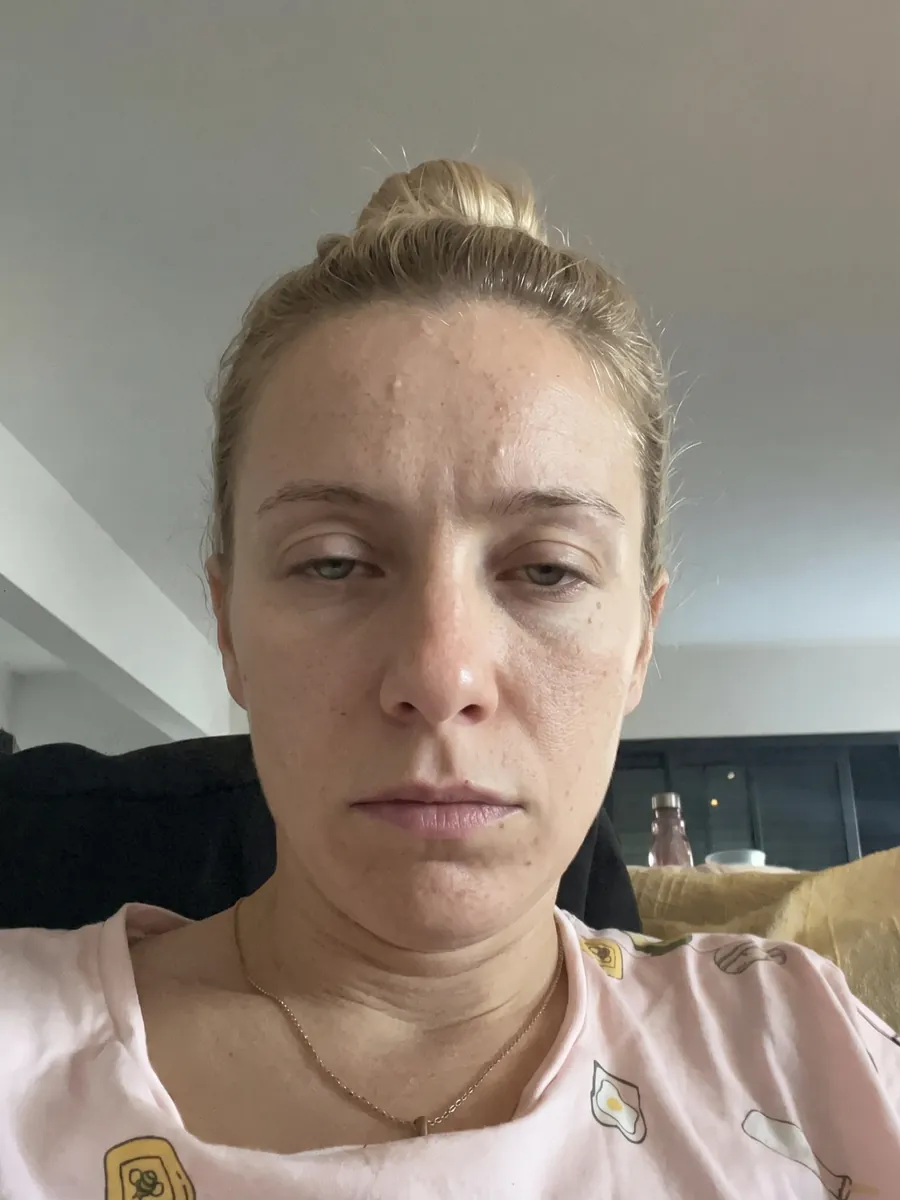
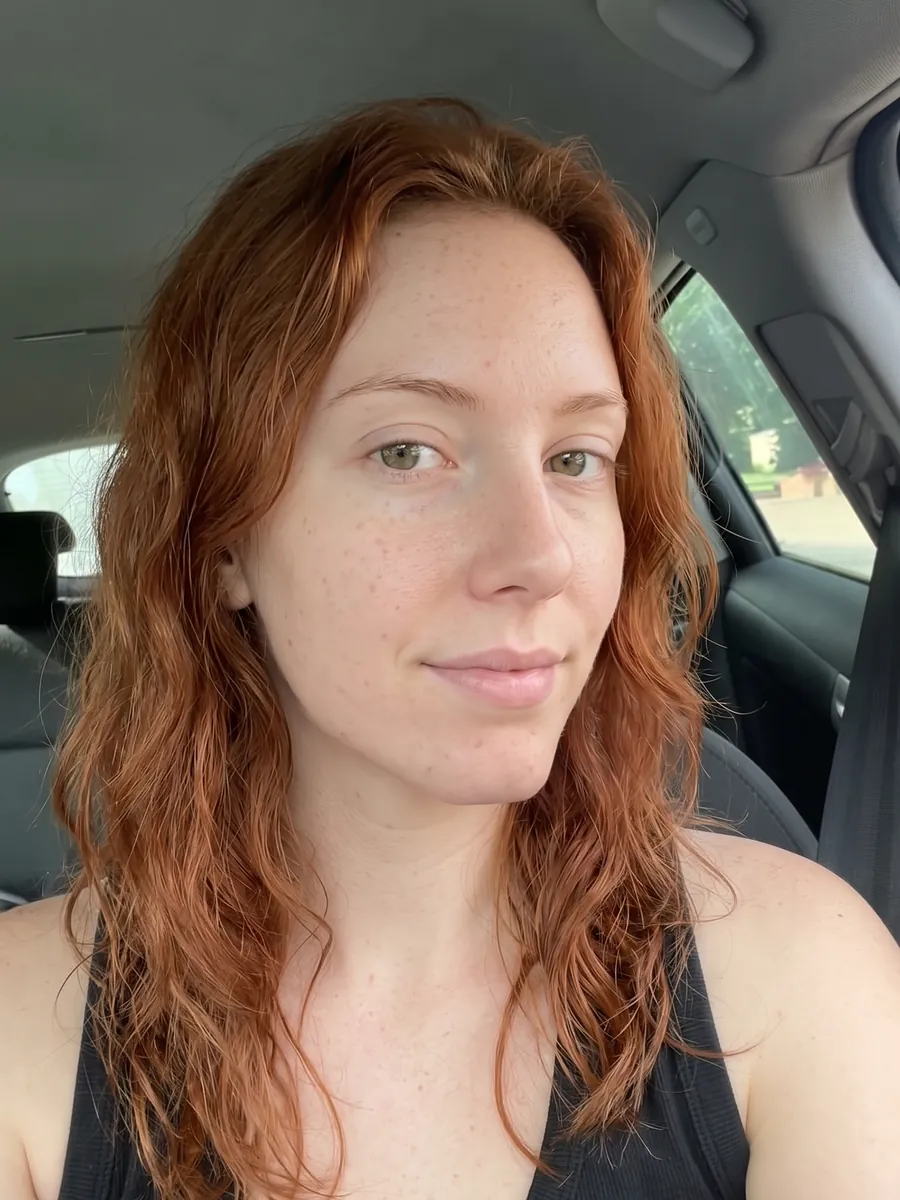
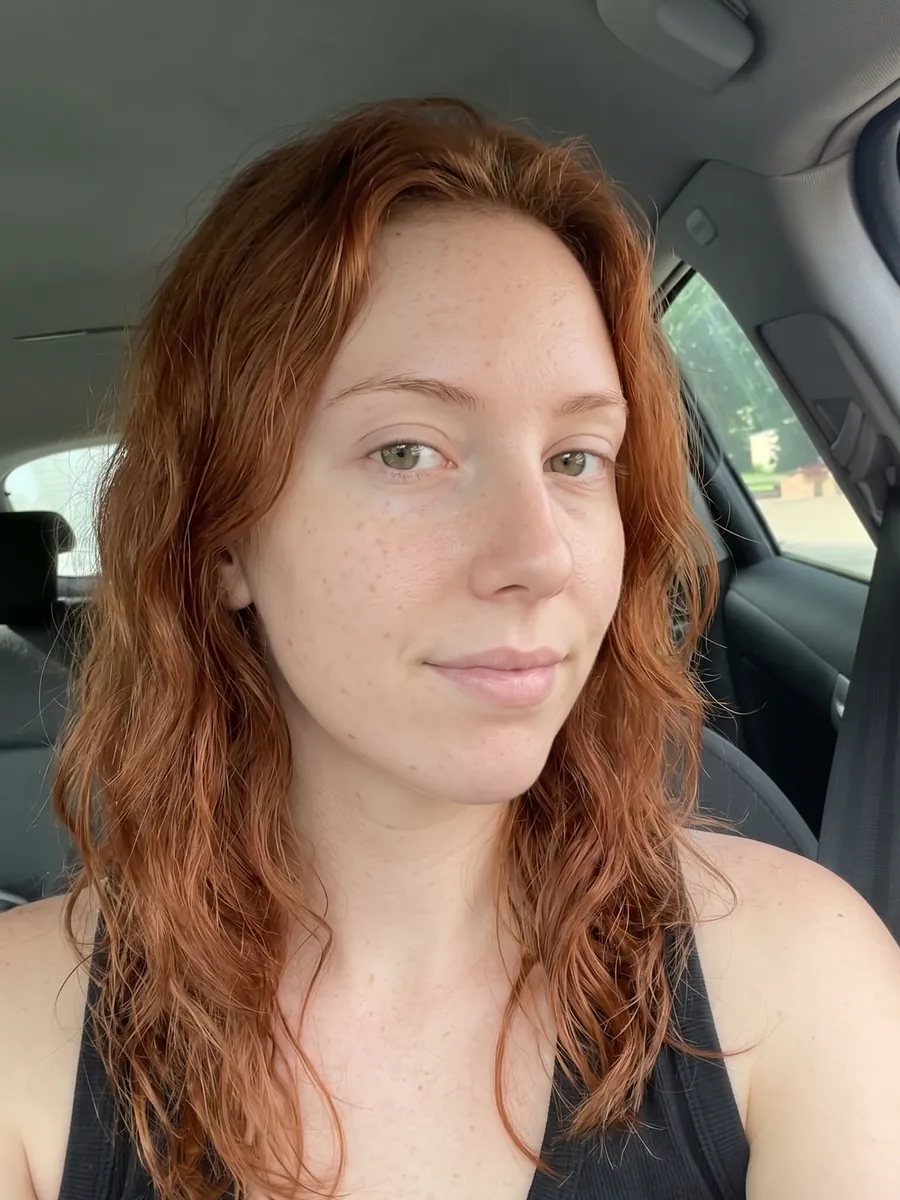
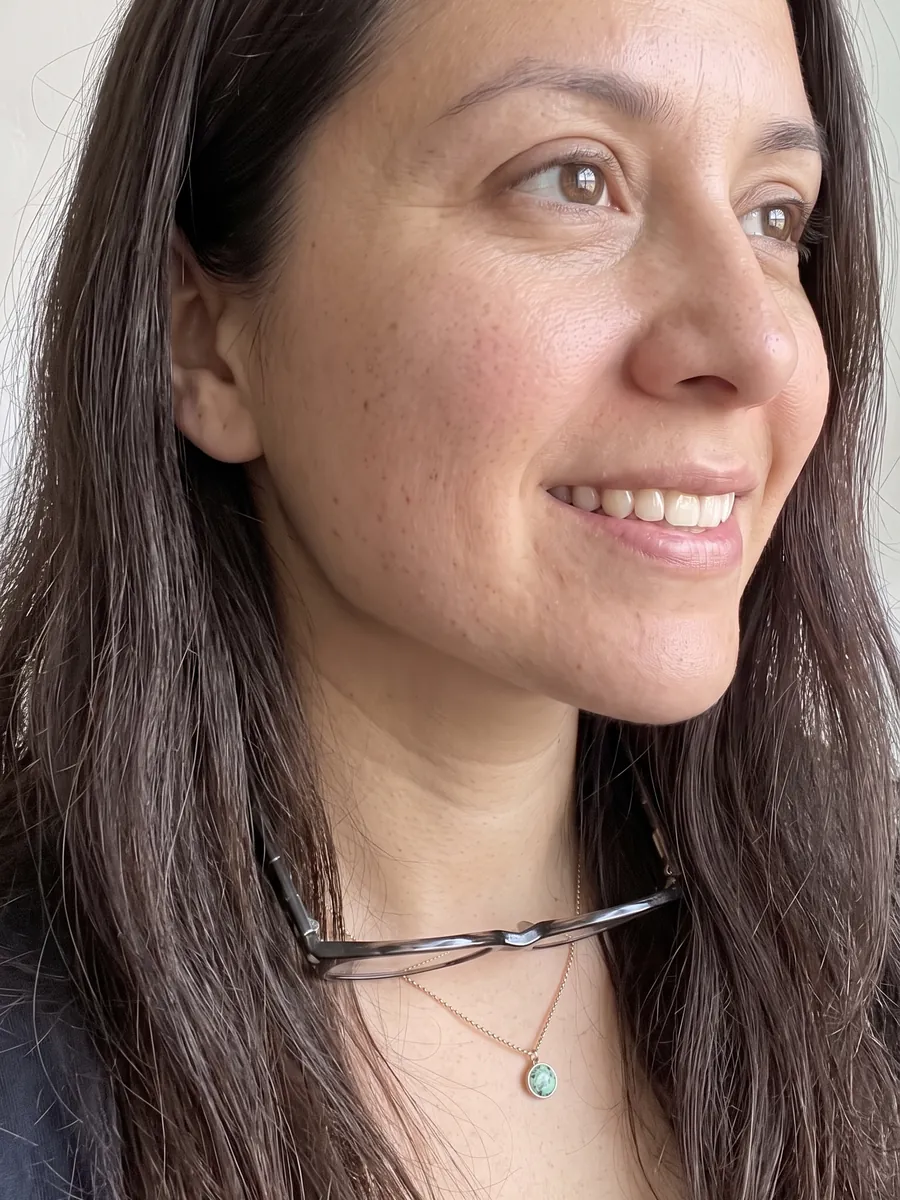
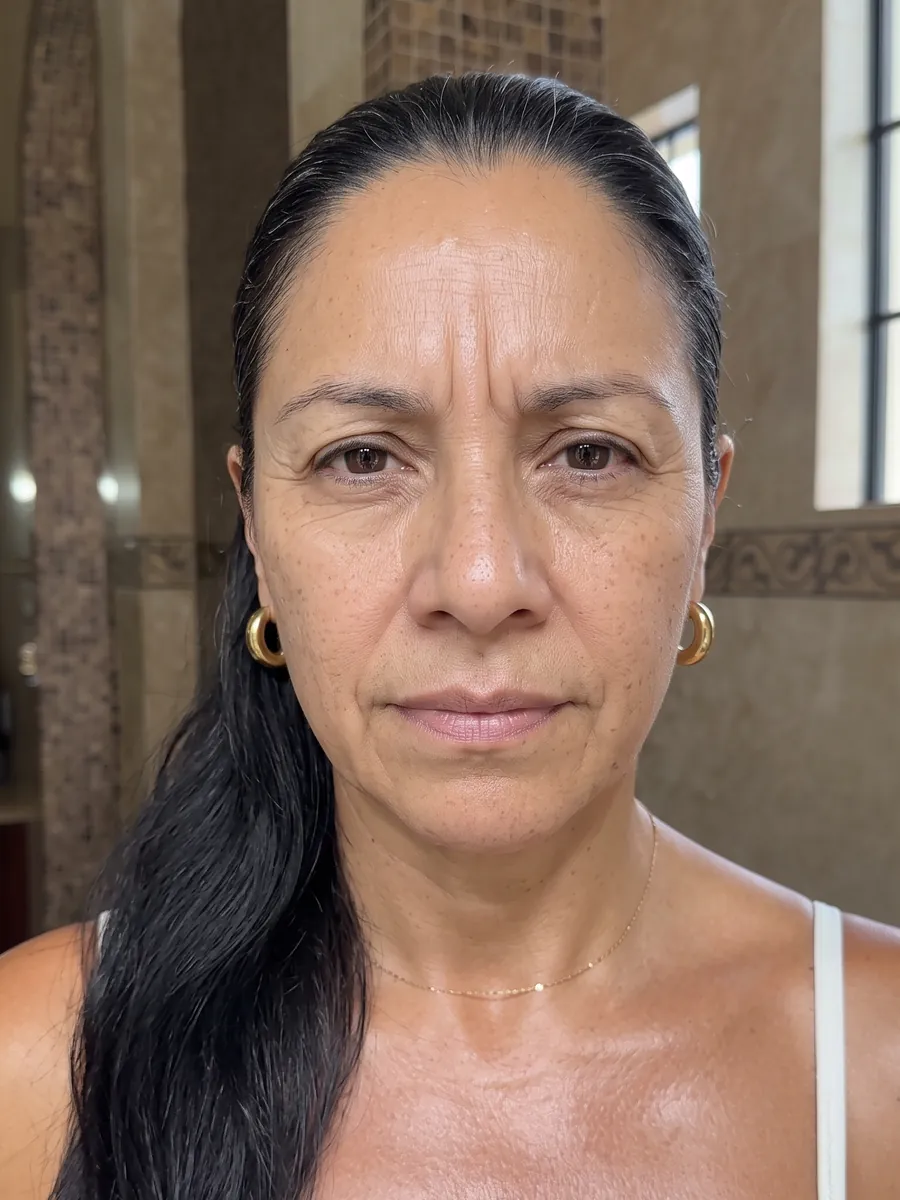
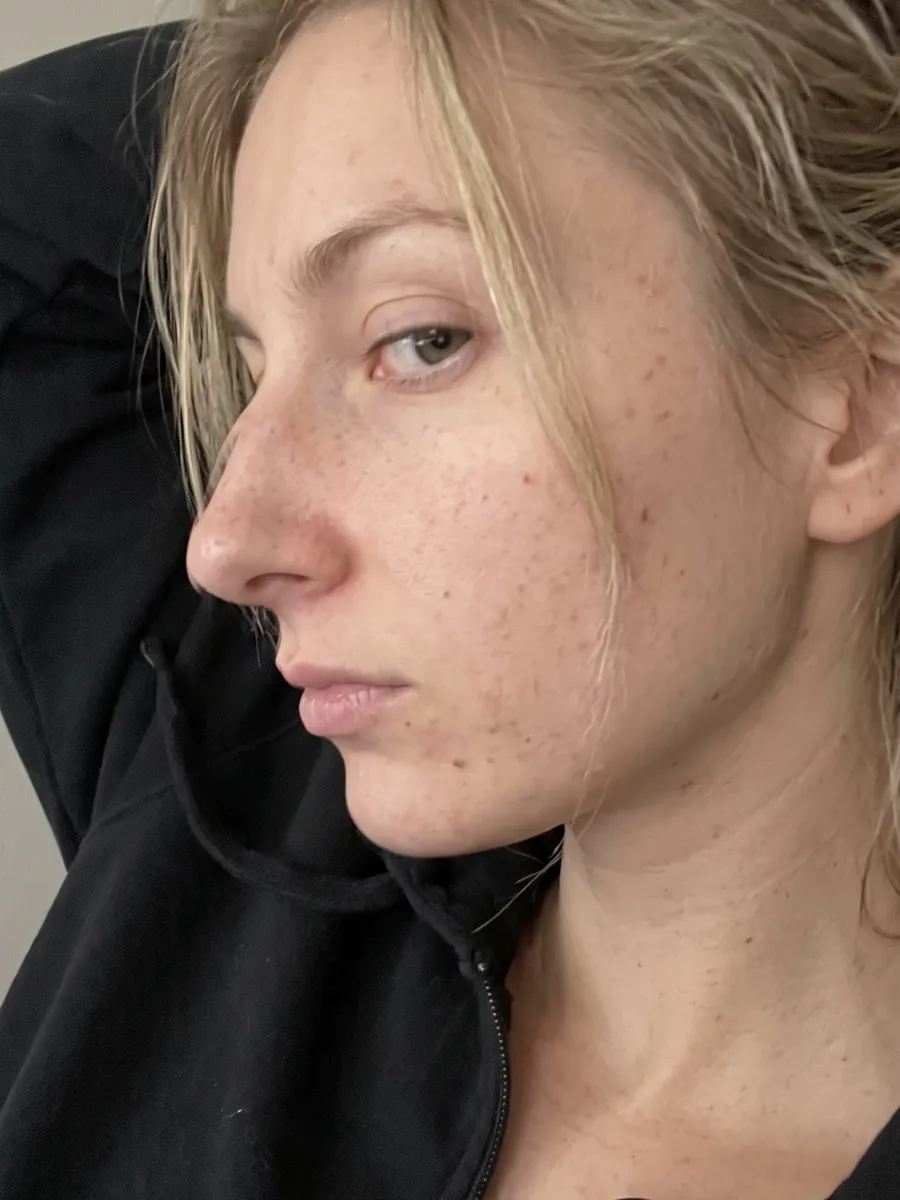
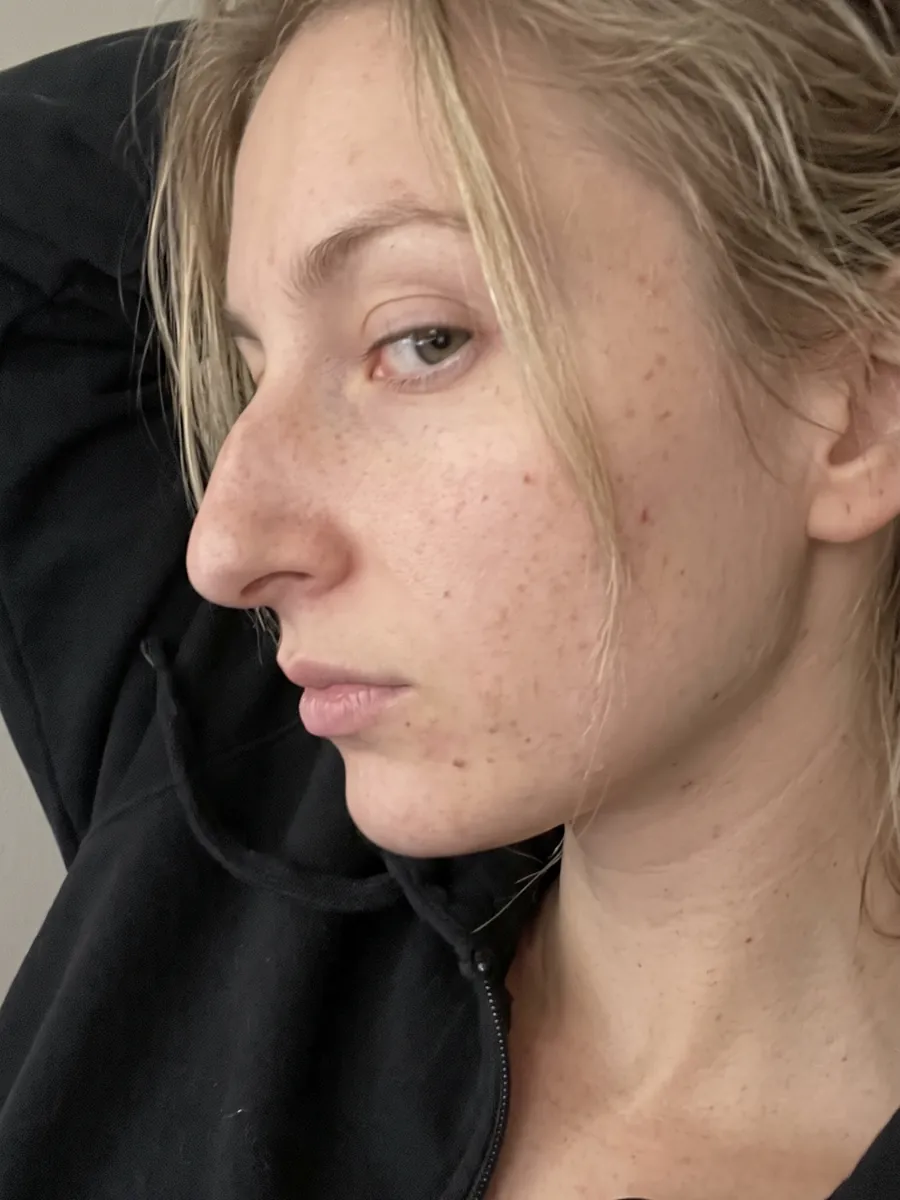
What you'd look like with a forehead reduction, on your own face
By Jérémie Aouate, founder of Mevona. Updated October 22, 2026.
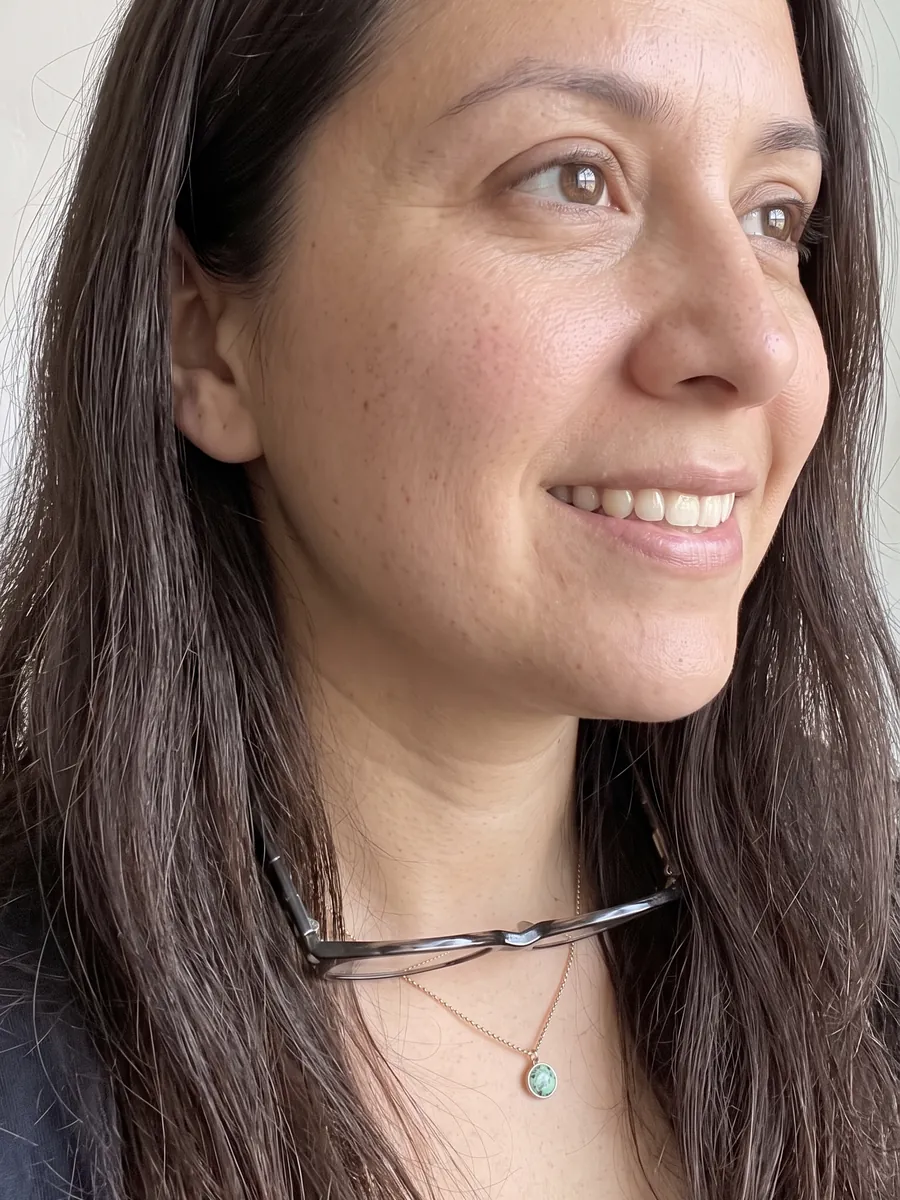
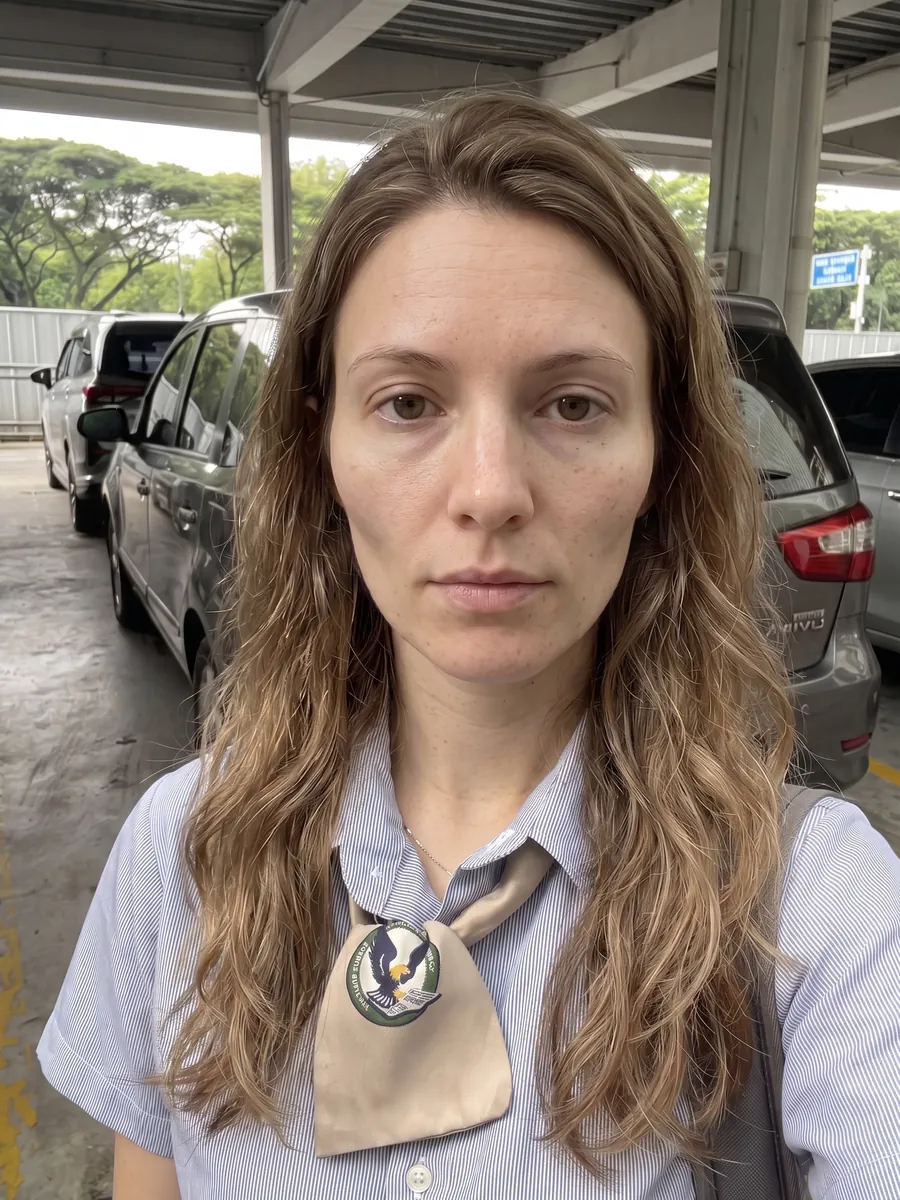
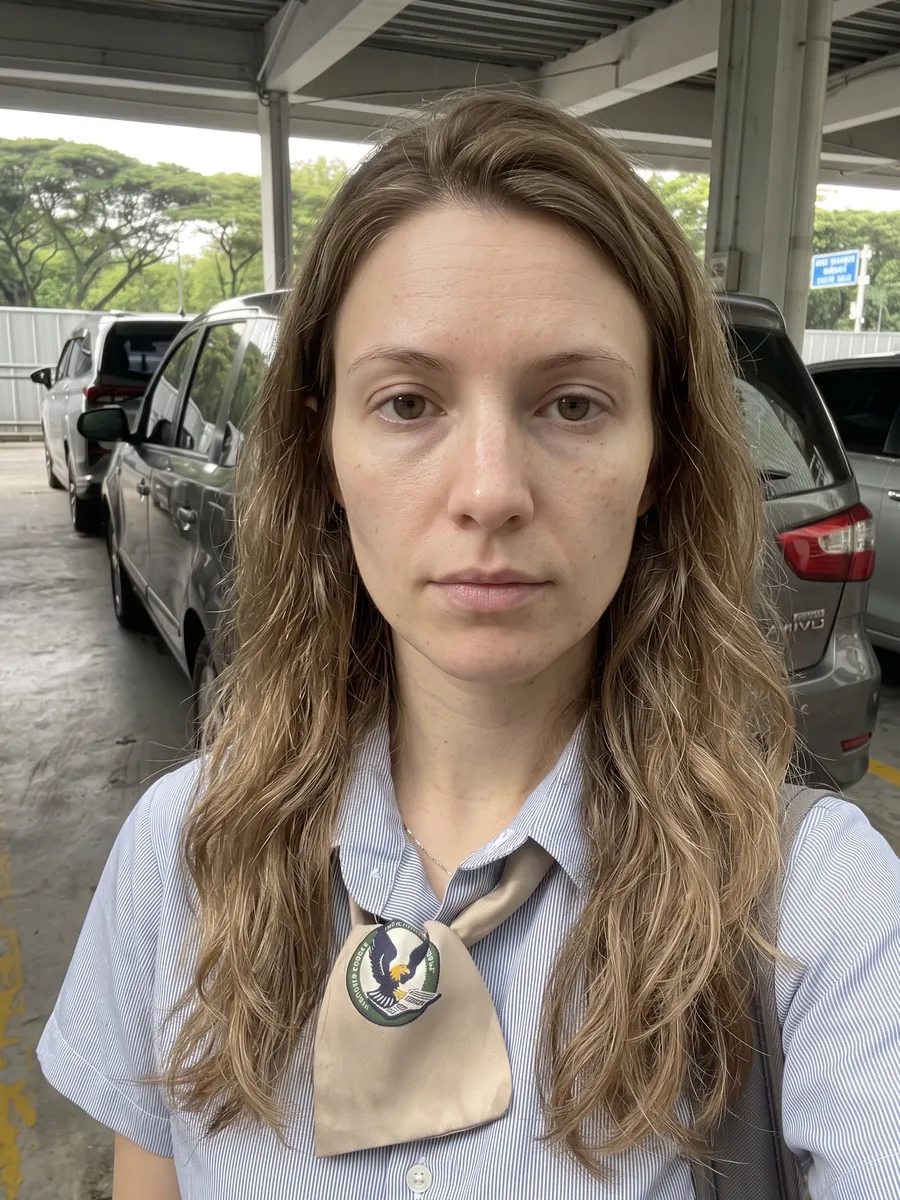
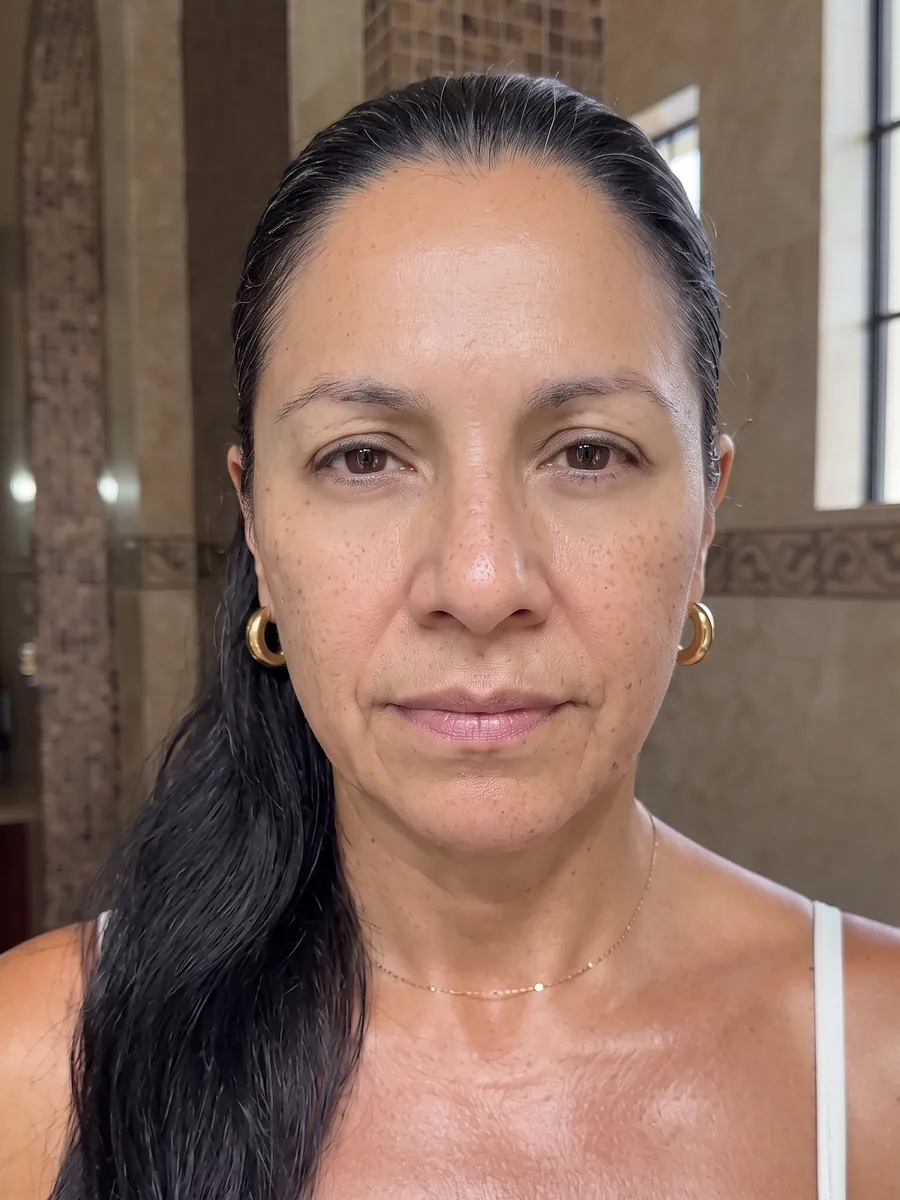
A forehead reduction lowers your hairline and shortens the forehead, the upper third of your face. This page shows what that looks like on a whole face, at three doses, from the front and in profile, what the scar along the hairline means, and how to see the same change on your own photos. What you see here is a Cosmetic Preview, an illustration of the kind of change, not a predicted result.


In short
- A forehead reduction, also called hairline lowering, brings the scalp forward through an incision at the hairline and removes the forehead skin in front of it, as a 1999 series of 180 people describes. A 2022 systematic review of 801 people measured a mean lowering of 1.6 cm.
- It is aimed at a hairline that sits high. Surgeons who describe the technique look for a stable hairline and a scalp that moves well.
- The change is immediate and lasting. In a series of 91 people, forehead length at one month did not differ from twelve months.
- No society publishes a US fee for hairline lowering. The closest ASPS figure, the average surgeon fee for a brow lift, is $5,460 before anesthesia and facility fees.
- This page shows a forehead reduction at three doses on one face, front and profile, and what the Facial Dossier reads on the hairline and the thirds of the face before any of it.
What forehead reduction changes
Your forehead runs from the brows to the hairline. Read from the front, it is the upper of the three thirds of the face, above the middle third (brows to the base of the nose) and the lower third (nose to chin). When the upper third is longer than the other two, the forehead reads tall, especially with the hair pulled back.
A forehead reduction works on that upper third only. Cleveland Clinic describes an incision along the length of the hairline, after which the skin is brought forward over the forehead, with the hair follicles preserved so the hair keeps growing. A 1999 series of 180 people gives the rest of the sequence: the whole scalp is moved forward, anchored to the bone, and the forehead skin left without hair in front of it is removed. The hairline sits lower and the forehead is shorter. In a 2019 series of 91 people, the forehead went from a mean of 8.1 cm to 6.6 cm, and the ratio of the three thirds went from 1.08 to 1 to 0.99, to 1 to 1 to 0.99.
What stays matters as much. The brows are not the target; raising them is a brow lift, a different operation, and the 1999 series anchors the scalp partly to keep the brows from rising too far. The bone of the forehead stays; contouring the brow bone is a separate procedure. Your hair keeps its own density and its own line, only lower. In the Cosmetic Preview on this page, everything else stays: eyes, nose, lips, jaw, skin and expression are those of the original photo.
In Mevona, forehead reduction sits in the brows zone, next to brow lift. In the Facial Dossier, two sections read what it would change. Hair, section 9 of 17, reads your hairline position on the front photo and ends with one of three verdicts: keep, change, or discuss. Proportions, section 11 of 17, reads how the upper third sits against the middle and lower thirds, alongside the face width-to-height ratio. That reading comes before any preview, so you know where you are starting from.
Where you'd stop: subtle, moderate, full
Mevona shows every procedure at three doses on the same photo. They are not surgical plans. They are three distances along the same direction, so you can see where you would want to stop. The names below are the ones you will see in the app.
Subtle: a slightly lower hairline
The hairline comes down a little, indicatively about 1 cm. The forehead still reads as yours, just a touch shorter, and the brows keep their distance from the hair. This is the dose to look at when the question is whether anyone would notice at all.
Moderate: a visibly shorter forehead
The hairline sits indicatively about 2 cm lower, close to the averages in published series: a mean of 1.6 cm in a 2022 review of 801 people, 1.8 cm in a series of 91. The upper third now reads closer to the middle third. This is the dose where the face reads more balanced in photos and the person is clearly the same.
Full: the shortest balanced forehead
The hairline is indicatively about 3 cm lower, beyond the averages above. The upper third is at its shortest while the forehead still reads as a forehead, not a line of hair resting on the brows. This is the far end of the direction, the dose to look at when you want to know whether a much shorter forehead suits the rest of your face.
Surgeons do not work in doses. How far a hairline can come down depends on how far the scalp can move, and the 1999 series notes that a stiffer scalp needs more release and more fixation. A surgeon judges that by examining your scalp, not from a photo. The three doses are a way of looking, not a menu. What is achievable on your forehead is a conversation to have with a qualified professional, with your photos and the preview in hand if you like.
Front and profile
The front view is where the thirds live. It shows how tall the forehead reads against the nose and the lower face, which is why the main visual on this page is the front.
The profile shows something the front cannot: the forehead curves back toward the top of the head, and the hairline sits somewhere on that curve. A hairline brought forward along the curve looks shorter on a front photo than it really moved. A 2009 series of 29 people measured it: the hairline was 1.3 cm lower on front photos, while the true advance along the curve, read in profile, averaged 2.1 cm. The same change gives two different numbers depending on the angle.
That is why Mevona asks for three photos, one from the front and one from each side. Look at the front first for the balance of the thirds, then at the profile to see where the new hairline sits on the curve of your forehead.
Techniques and variants
Forehead reduction is one operation with a few variations, and two neighbours that are easy to confuse with it:
- Hairline lowering in one stage. The standard approach: an incision at the hairline, the scalp moved forward, the forehead skin in front of it removed, as Cleveland Clinic and the 1999 series describe it.
- Irregular hairline incision. Instead of a straight cut, the incision follows the hairline in an irregular line. The 2009 series used it, with the scalp advanced from behind, to make the scar hard to see.
- Fixation of the scalp. Surgeons hold the advanced scalp in place while it heals. The 1999 series used tunnels in the bone, in one to three rows depending on how far the scalp moved, and a 2019 series of 91 people used the same idea instead of an implanted device.
- Hairline brow lift. An incision at the hairline that raises the brows and lowers the forehead height at the same time, according to Cleveland Clinic. See brow lift.
- Hair transplant. Hair moved to the front of the scalp rather than skin removed. It can lower a hairline too, more slowly. See hair transplant and the comparison below.
- Brow bone contouring. A separate procedure on the bone above the brows, not on the hairline, as Cleveland Clinic describes it.
Who usually considers it
People come to this page from a few starting points: a hairline that has always sat high, a forehead that reads tall in photos or with the hair tied back, an upper third that looks longer than the middle and lower thirds, or a wish to shorten the forehead while keeping the density of their own hairline. Hairline lowering is also one of the procedures Cleveland Clinic describes within facial feminization surgery. The question on this page is the same for everyone: what a lower hairline would look like on your own face.
Two conditions come up in the surgical descriptions. Surgeons who describe the technique look for a stable frontal hairline, so active hair loss changes the conversation, and for a scalp mobile enough to move forward. The same surgeons present hairline lowering as an alternative to a hair transplant, which moves hair instead of skin.
None of that says whether a forehead reduction is right for a given face. A preview cannot tell you that. What it can do is show you the direction and the distance, so that when you discuss it with a qualified professional, you already know which dose you were picturing and how it reads from the front and in profile.
Forehead reduction vs hair transplant
| Forehead reduction | Hair transplant | |
|---|---|---|
| What it is | The scalp moved forward through a hairline incision, the forehead skin in front removed | Hair moved from one part of the scalp to bald or thinning areas, according to Cleveland Clinic |
| What it can do | Lower the whole hairline in one operation, with your own density: a mean of 1.6 cm in a 2022 review | Add hair to bald or thinning areas, including the front of the scalp |
| What it cannot do | Stop ongoing hair loss; it needs a stable hairline and a mobile scalp | Give an immediate result: grafted hair may shed first, and full results take up to a year |
| How long it lasts | Lasting; the height at one month held at twelve months in a series of 91 | Several sessions may be needed, a few months apart |
| Recovery | Stitches out at about a week, most healing within two to six weeks | Back to light work in three to five days, stitches out around day 10, sport after three weeks |
| Reversibility | Not reversible | Not reversible |
| Risks named by the source | Numbness, folliculitis, scarring, hair loss at the incision, revision (2026 review) | Anesthesia reaction, bleeding, failed grafts, infection, loss of scalp sensation, scarring (Cleveland Clinic) |
Surgeons who describe hairline lowering present it as an alternative to a transplant, with immediate results and the density of the existing hair as its advantages. The preview on this page illustrates the surgical change: the line moves down as a whole, with the same density.
Cost, recovery, risks
Cost
No society publishes an average fee for hairline lowering, so this page shows no cost table. The closest figure the ASPS reports is the average surgeon fee for a brow lift, also called a forehead lift, $5,460. It excludes anesthesia, the operating facility and related costs, and a hairline lowering is a different operation that each surgeon prices separately, so read it as a reference point, not a quote. Ask for the total, including anesthesia and the facility.
Recovery
- Day 0Surgery. An incision runs along the hairline and the scalp is brought forward over the forehead, according to Cleveland Clinic. Gauze or bandages stay on for several days, sometimes with a compression wrap.
- Week 1Non-absorbable stitches come out about a week after surgery, or absorbable ones are used instead, according to Cleveland Clinic.
- Week 2For a forehead and eyebrow lift, a neighbouring operation, Cleveland Clinic says most people fully recover within two weeks and return to their normal routine.
- Week 2 to 6Most healing happens in this window according to Cleveland Clinic. A numb or tingling scalp is expected: a 2026 review found temporary changes in sensation in 97.3 percent of people.
- Month 1 to 12The new forehead height is in place from the start. In a series of 91 people, forehead length at one month did not differ from twelve months. Cleveland Clinic puts the full result at about a year.
Two sources frame the timeline. Cleveland Clinic describes gauze or bandages for several days, sometimes a compression wrap, stitches out at about a week, most healing within two to six weeks and the full result at about a year; for a forehead and eyebrow lift, a neighbouring operation, it says most people return to their normal routine within two weeks. A 2019 series of 91 people adds that the result is in place from the start: the forehead length measured at one month did not differ from twelve months.
Risks
Among the risks of facial surgery that includes hairline lowering, Cleveland Clinic lists hair loss, bleeding, bruising, swelling, infection, numbness, poor healing of the incision and reactions to anesthesia. Two systematic reviews give the scale. The 2022 review of eight studies and 882 people found temporary and permanent hair loss, unacceptable scarring, persistent numbness and hematoma, at a pooled rate of 1 percent or less. The 2026 review of 14 studies and 3,213 people found an overall complication rate of 5.9 percent: folliculitis 25.1 percent, scarring 5.5 percent, seroma 2.4 percent, hair loss at the incision 0.7 percent, revision 1.3 percent, and a later hair transplant 1.2 percent. Temporary changes in sensation were near universal, at 97.3 percent.
The scar deserves a plain word. It runs along the front of the hairline, which is the point of the operation and its trade-off. The 2009 series used an irregular incision to make the scar hard to see, and its authors still describe the incision as potentially visible, with one scar in 29 revised. Your own risk, and how your hair would fall over the line, belong in a consultation with a qualified professional. Cosmetic Previews are illustrative and do not predict the result of any procedure.
Often combined with
Two combinations come up often enough that Mevona previews them on the same photo:
- Brow lift. A tall forehead and low brows can sit on the same face. Cleveland Clinic describes a hairline brow lift that raises the brows and lowers the forehead height through the same incision. Seeing both on one photo shows which part of the change you were picturing. See brow lift.
- Hair transplant. Cleveland Clinic notes a surgeon can add a hair transplant when needed, and the 2026 review found 1.2 percent of people had one after a forehead reduction. Together, the line comes down and fills in. See hair transplant.
The combination previews use the moderate dose of each procedure, from the front.
Send three photos from your phone, front and both sides, in your own light. Pick forehead reduction and a dose, and see your hairline come down while the rest of your face stays yours. Then try the next dose, switch to profile to see where the line sits on the curve of your forehead, and compare with a brow lift or a hair transplant on the same photo. Your Facial Dossier follows within 24 hours, with the hairline and the thirds of your face read. One membership, $99 a year, all 29 procedures. Take your time, then decide.