Lower jaw advancement: what you'd look like, on your own face
By Jérémie Aouate, founder of Mevona. Updated October 22, 2026.
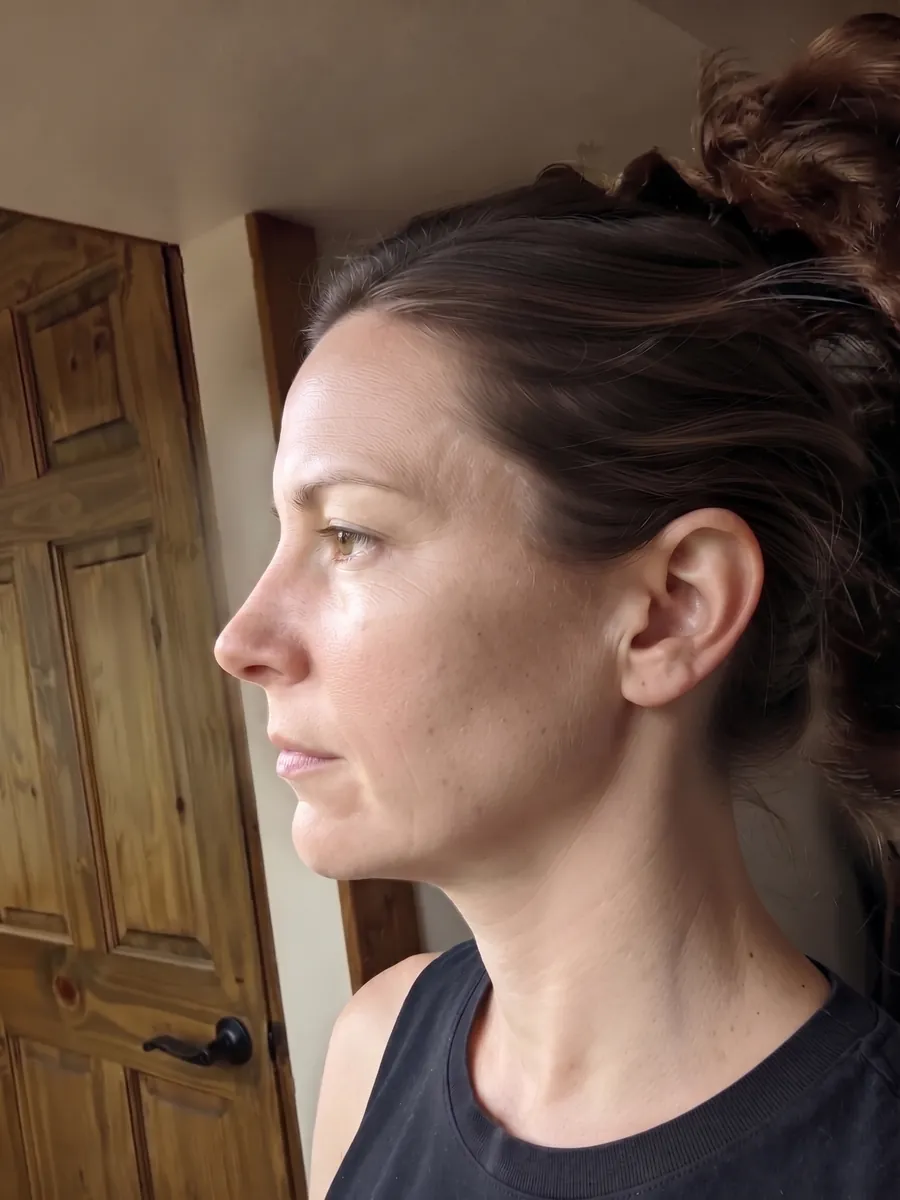
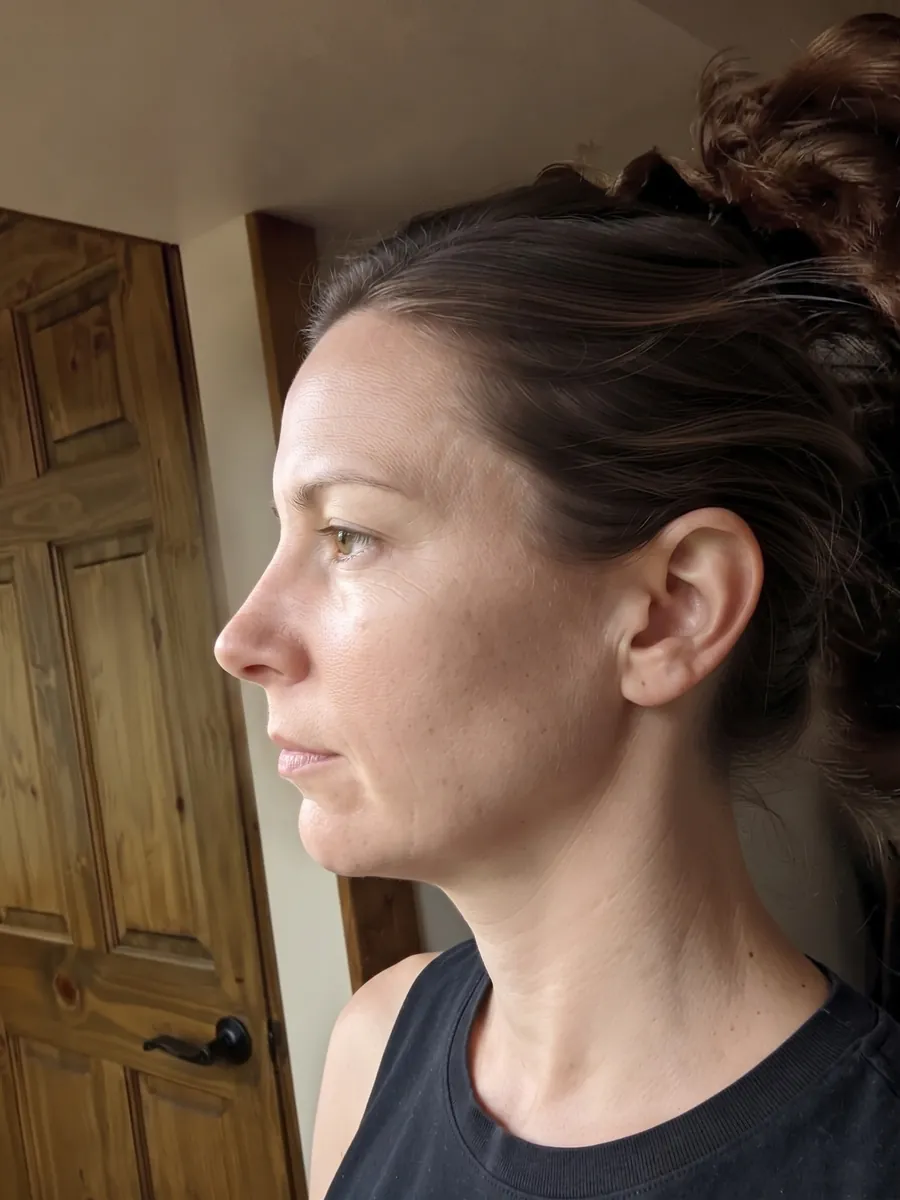
A lower jaw advancement moves your lower jaw forward as one block of bone, and with it your lower teeth, your chin and your lower lip. This page shows what that looks like on a whole face, at three doses, in profile and from the front, and how it is really decided: on your bite, by a surgeon and an orthodontist. What you see here is a Cosmetic Preview, an illustration of the kind of change, not a predicted result.
In short
- Lower jaw advancement is orthognathic surgery, or jaw surgery. Through incisions inside the mouth, the bone is moved to a planned position and held with plates and screws, according to the ASPS. For an advancement, the operation studied in the reviews cited here is the bilateral sagittal split osteotomy, which splits the lower jaw on both sides.
- It is planned on your bite and your airway by an oral and maxillofacial surgeon and an orthodontist. The ASPS describes a consultation with both, and Cleveland Clinic describes orthodontics before and after surgery. The millimeters are decided on how your teeth meet. The preview on this page is an aesthetic visualization, never a surgical plan.
- In profile, the chin, the lower lip and the line under the jaw come forward. The nose, the eyes and the cheekbones stay where they are.
- Cleveland Clinic puts the whole process, orthodontics included, at two to three years, the hospital stay at one to three days and complete healing at up to a year. Lower lip numbness is common: a systematic review measured it in 12.8 percent of people at one year.
- No US society publishes a fee. The only national figure we could verify is a mean hospital charge of $47,348 per stay in 2008, and the ASPS notes that insurance often covers it when a functional problem is documented.
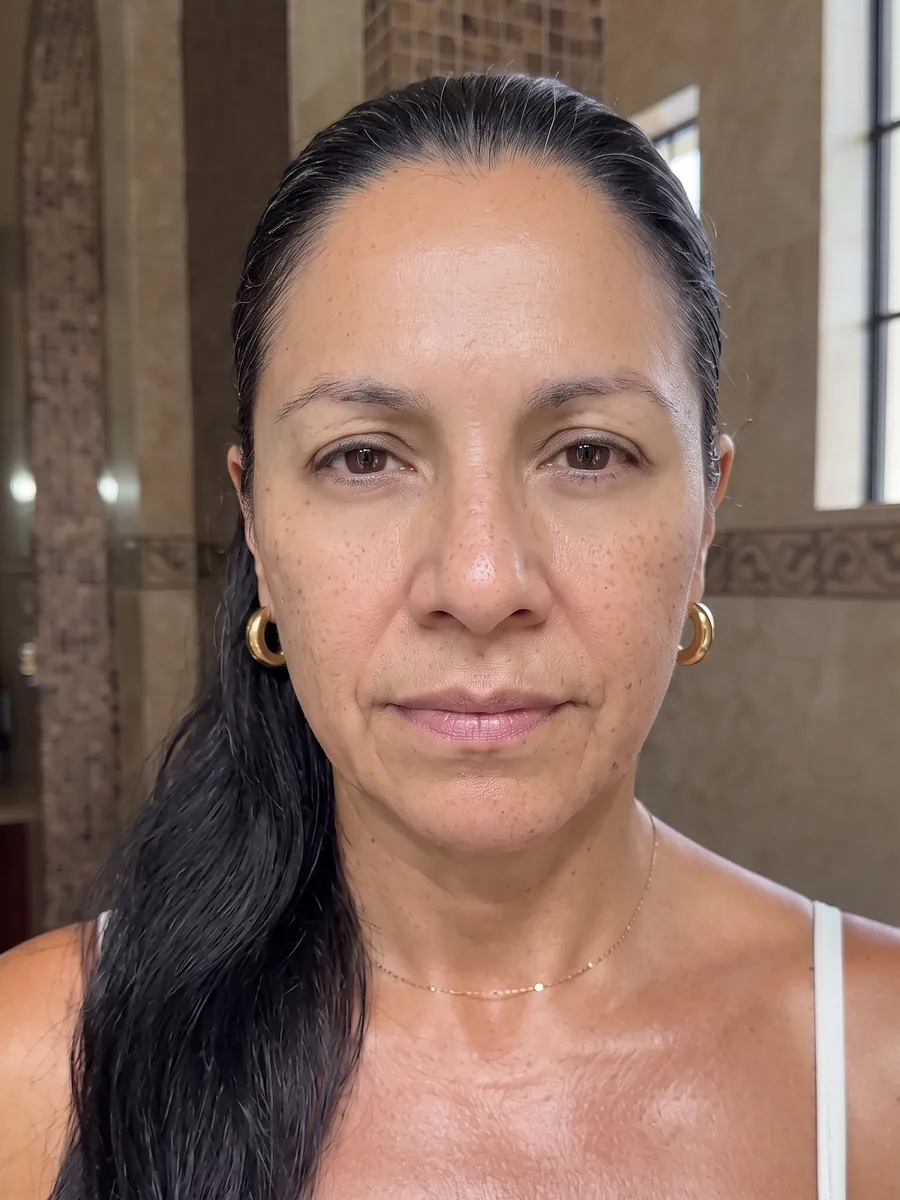
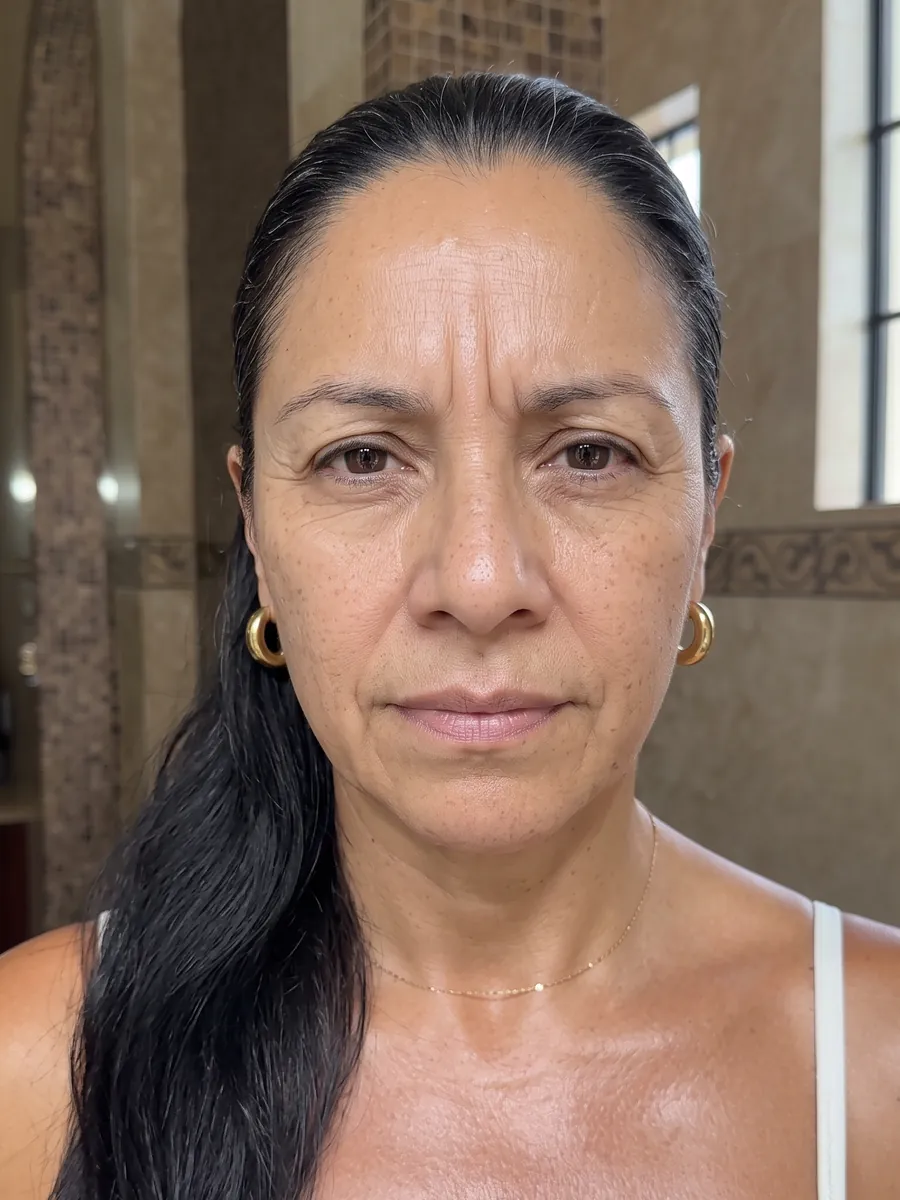
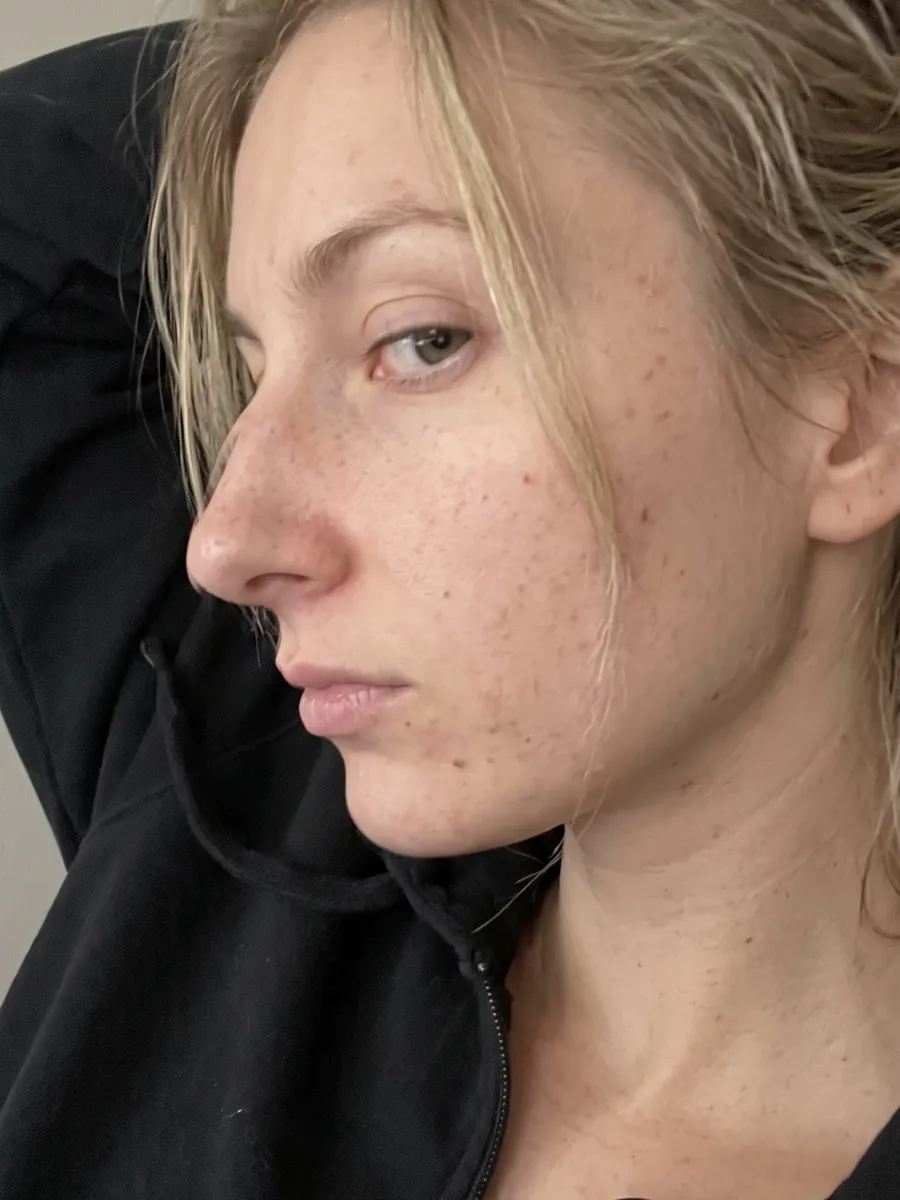
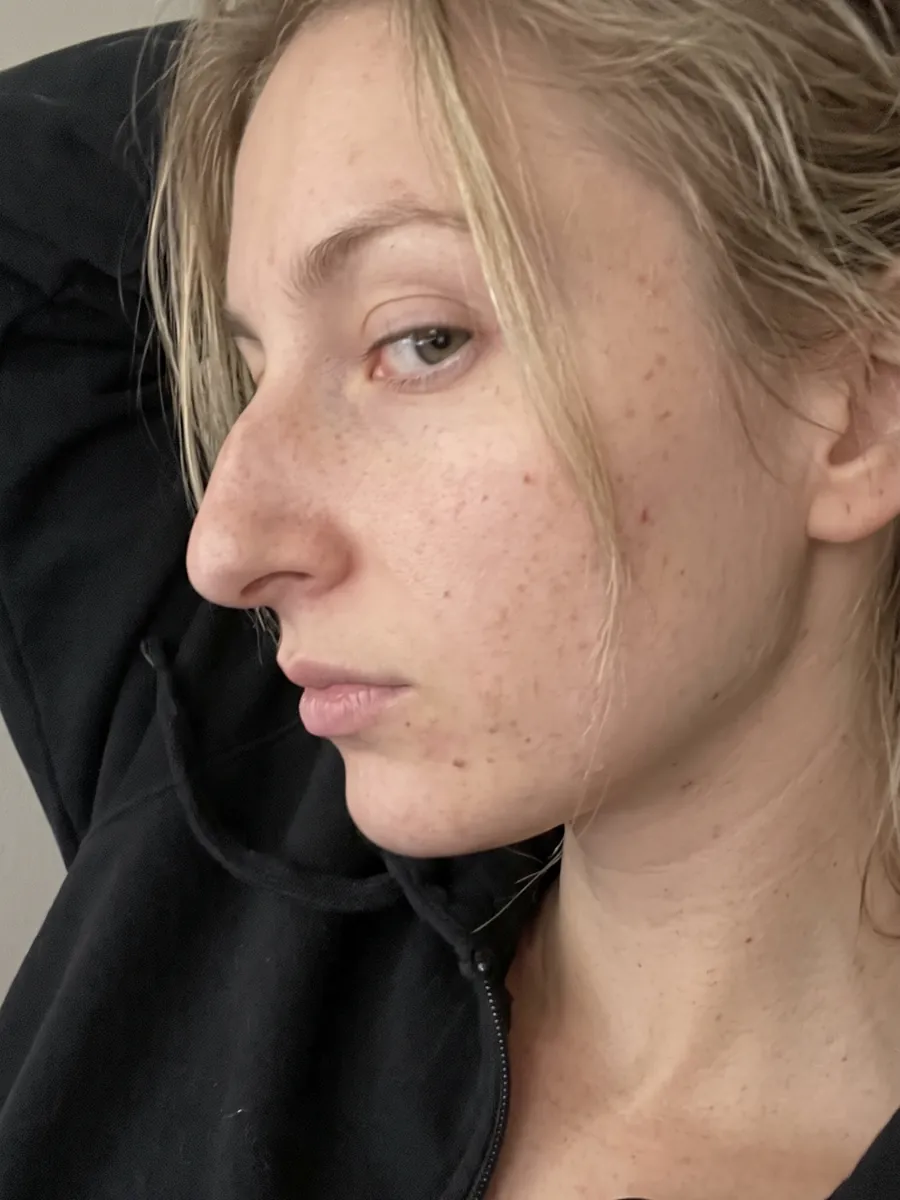
- This page shows the advancement at three doses, in profile first, then from the front, on one face.
What lower jaw advancement changes
Your lower jaw carries your lower teeth, your chin and, through the soft tissue over it, your lower lip. When it sits back relative to the upper jaw, the lower teeth close behind the upper ones, the chin reads set back in profile, and the line between the chin and the neck can look short. The ASPS lists overbite and under-development of the lower jaw among the problems orthognathic surgery addresses, along with obstructive sleep apnea and facial proportions.
According to the ASPS, the surgeon works through incisions inside the mouth, moves the bone into the planned position and holds it with plates and screws. In a bilateral sagittal split osteotomy, the operation used for an advancement in the reviews cited here, the lower jaw is split on both sides behind the teeth so that the part carrying the teeth can move forward. Because the teeth move with the bone, the bite is the reference: the jaw goes where the teeth meet properly, not where a profile alone would put it. That is why this operation is planned by an oral and maxillofacial surgeon and an orthodontist together, on your bite and, when breathing is part of the picture, on your airway. Cleveland Clinic describes orthodontics before surgery to prepare the teeth and after it to move them into place.
What changes on the face: the chin comes forward, the lower lip gains support, and the angle between the chin and the neck reads sharper in profile. What does not change: your nose, your upper jaw unless it is operated on too, your cheekbones, your eyes and your expression. Everything else stays.
It is not the same as making the chin bigger. A chin implant or a genioplasty changes the chin alone. An advancement moves the whole lower jaw with the teeth.
In the Facial Dossier, the jaw has its own section, number 8 of 17, which covers the chin and the jaw and is read on your three photos. It includes jaw width, read with guides, and the Proportions section gives your face width-to-height ratio. The Dossier does not see your teeth and does not assess your bite; that takes an examination, x-rays and dental models. The section ends with one of three verdicts: keep, change, or discuss.
Where you'd stop: subtle, moderate, full
Mevona shows every procedure at three doses on the same photo. For lower jaw advancement they are three distances forward along the same direction. You can read them as about 3, 6 and 9 mm of advancement, an indicative scale only: in surgery, the number of millimeters is decided on your bite, never on a photo.
Subtle: a slightly forward jaw
The chin comes forward a little and the lower lip sits slightly fuller. The line under the jaw lengthens just enough to read in profile, while the front view barely changes. Read it as around 3 mm, indicative only.
Moderate: a clearly advanced jaw
The chin and the lower lip line up closer to the upper lip, and the angle between the chin and the neck reads sharper. From the front, the chin is more present and the lower face reads a little fuller. Read it as around 6 mm, indicative only.
Full: the full advancement
The profile shows the largest forward move the preview makes in one pass, with the chin well ahead of where it started. It is the dose to look at when you want to know whether a strong lower jaw still fits your nose and your upper lip. Read it as around 9 mm, indicative only; a 2009 systematic review of 24 studies found that advancements of 6 to 7 mm or more predispose the jaw to move back after surgery, which surgeons call relapse.
Surgeons do not work in doses. They move the jaw by the number of millimeters your bite needs. The three doses are a way of looking, not a menu. What is achievable on your jaw is a conversation to have with a qualified professional, which for this operation means an oral and maxillofacial surgeon and an orthodontist, with your photos and the preview in hand if you like.
Front and profile
Lower jaw advancement is a forward move, and forward moves live in profile. The position of the chin, the support of the lower lip and the line from the chin to the neck all show from the side, which is why the main visual on this page is the profile.
The front view still matters. It shows how present the chin becomes, how the lower third of the face balances with the nose and the eyes, and whether the jaw reads wider or longer than you expected. A before and after that only shows one angle is telling half the story.
That is why Mevona asks for three photos, one from the front and one from each side. Look at the profile first for the chin and the neck, then at the front view to check that the lower face still fits the rest of you. On the same photo, the full dose reads as a clear change in profile and as a smaller one from the front, which is what you would expect from a move that goes forward rather than outward.
Techniques and variants
Jaw surgery is a family of operations. The main ones, as Cleveland Clinic describes them:
- Lower jaw surgery. A mandibular osteotomy, for a lower jaw that sits too far forward or too far back. An advancement is the second case, and the bilateral sagittal split osteotomy is the operation studied in the reviews on this page.
- Upper jaw surgery. A maxillary osteotomy, for an upper jaw that sits too far forward or too far back.
- Double jaw surgery. Both jaws in the same operation, a bimaxillary osteotomy. It has its own page: double jaw surgery.
- Genioplasty. A change to the shape or size of the chin, sometimes done as part of jaw surgery. See chin augmentation.
- Other routes. The ASPS notes that orthognathic surgery is not the only way to address a bite problem, a facial imbalance or sleep apnea.
Whatever the variant, the plan starts from x-rays, often CT scans, photos and dental models, according to the ASPS, and the surgeon and the orthodontist set the movement on those.
Who usually considers it
People arrive at this page from a few starting points: a chin that reads set back in profile, lower teeth that close well behind the upper ones, sleep apnea, or years of braces that did not change the way the jaws meet. The ASPS names the last one directly among the people who consider orthognathic surgery, along with a bite discrepancy and facial imbalance. Cleveland Clinic adds that a surgeon may recommend waiting until the jaw has stopped growing.
None of that says whether jaw surgery is right for a given face. A page cannot assess a bite, and a preview cannot either. What a preview can do is show you the direction and the distance, so that when you discuss it with a qualified professional, you already know which dose you were picturing and whether it was the profile or the front view that mattered to you. The concern page goes deeper on the most common starting point: weak chin.
Lower jaw advancement vs chin augmentation
| Lower jaw advancement | Chin augmentation | |
|---|---|---|
| What it is | Surgery that moves the whole lower jaw, with the teeth, forward | Surgery that adds an implant to the chin or moves chin bone forward, according to the ASPS |
| What it can do | Bring the chin, lower lip and teeth forward together; address the bite and, for some, sleep apnea, according to the ASPS | Bring the chin forward in profile |
| What it cannot do | Change the nose, the cheekbones or the upper jaw on its own | Change the bite; the ASPS notes that work on the jaws can be advised for chewing and occlusion |
| How long it lasts | A lasting bone change; the ASPS names relapse of the bite as a risk | Implant or bone: lasting; filler lasts a shorter time, according to the ASPS |
| Recovery | One to three days in hospital, a liquid diet for weeks, initial healing in about six weeks, according to Cleveland Clinic | Mild swelling for a few days and back to work within a week for an implant, according to the ASPS |
| Reversibility | Not reversible; revision surgery is possible | Revision surgery is possible; implant displacement is a named risk |
| Risks named by the ASPS | Anesthesia, bleeding, damage to teeth, improper bone healing, jaw joint problems, limited mouth opening, numbness of the cheeks and lower lip, relapse of the bite | Anesthesia, asymmetry, implant displacement, infection, changes in skin sensation, capsular contracture, a suboptimal result |
In profile, both bring the chin forward. Only an advancement moves the teeth with it, so only an advancement changes the bite, and only an advancement needs an orthodontist. If your bite is fine and only the chin reads short, that is the case the chin augmentation page covers.
Cost, recovery, risks
Cost
No US society publishes a fee for jaw surgery, so this page shows no cost table. The ASPS lists what the bill is made of: the surgeon's fee, the hospital or surgical facility, anesthesia, prescriptions and medical tests. It adds that orthognathic surgery is often covered by insurance when a functional problem can be documented, and that many plans exclude it. The only national figure we could verify is old: in 2008, the Nationwide Inpatient Sample counted 10,345 hospitalizations for orthognathic surgery in the US, with a mean stay of 2.95 days and a mean charge of $47,348 per stay. A charge is what the hospital bills, not what people pay, and the study does not break it down.
Recovery
- Before surgeryBraces line the teeth up for the new jaw position. Cleveland Clinic puts the whole process, orthodontics and surgery, at two to three years. The surgeon plans the move on x-rays, often CT scans, photos and dental models, according to the ASPS.
- Day 0General anesthesia, with incisions inside the mouth. The lower jaw is moved to the planned position and held with plates and screws, according to the ASPS. Cleveland Clinic puts the hospital stay at one to three days.
- Week 1 to 2A liquid diet for the first few weeks, according to Cleveland Clinic. Bruising, swelling, a stuffy nose and a sore throat ease after a week or two.
- Week 3 to 6Most people return to their daily routine after three to four weeks, and the initial healing takes about six weeks, according to Cleveland Clinic.
- Month 1 to 2The new profile shows fully as swelling and bruising subside over a month or two, according to the ASPS. Braces stay on after surgery to move the teeth into place.
- Up to a yearCleveland Clinic says it may be a year before the jaw heals completely. Lower lip numbness often fades: a systematic review found it in 63.3 percent of people at one week and 12.8 percent at one year on objective testing.
Two sources frame the timeline. Cleveland Clinic puts the hospital stay at one to three days, a liquid diet for the first few weeks, a return to daily routine after three to four weeks, initial healing in about six weeks, and complete healing in up to a year. The ASPS adds the planning before surgery, on x-rays, often CT scans, photos and dental models, and says the result shows fully as swelling and bruising subside over a month or two. Orthodontics continues after surgery to move the teeth into their final place.
Risks
The ASPS lists the risks of jaw surgery: anesthesia risks, bleeding, damage to teeth, improper healing of the bones, infection, jaw joint problems, limitation in mouth opening, numbness of the cheeks and lower lip that can on occasion be permanent, the possible need for revision surgery, relapse of the original bite problem, swelling and bruising, and unfavorable scarring. Cleveland Clinic names lingering numbness around the mouth among the effects of jaw surgery.
Numbness of the lower lip is the one most people notice. A 2007 systematic review of seven studies on this operation found altered sensation in 63.3 percent of people a week after surgery on objective testing, and 83 percent by their own report; at one year, the figures were 12.8 percent and 18.4 percent. A 2009 systematic review found that advancements of 6 to 7 mm or more predispose the jaw to relapse. Your own risk depends on your anatomy, your bite, your health and the movement planned, and belongs in a consultation with a qualified professional. Cosmetic Previews are illustrative and do not predict the result of any procedure.
Often combined with
Two combinations come up often enough that Mevona previews them on the same photo:
- Chin augmentation. An advancement moves the chin with the teeth, so when the bite is set and the chin still reads short, an implant or a genioplasty adds projection on its own. Cleveland Clinic notes that a genioplasty is sometimes done as part of jaw surgery. See chin augmentation.
- Neck lift. Bringing the chin forward changes the line under the jaw. When the angle between the chin and the neck still reads soft, a neck lift works on the neck itself, and the two are discussed together. See neck lift.
The combination previews use the moderate dose of each procedure, in profile.
Send three photos from your phone, front and both sides, in your own light. Pick lower jaw advancement and a dose, and see your chin and lower jaw come forward on your own profile while the rest stays yours. Switch to the front view, then try it with chin augmentation or a neck lift on the same photo. Your Facial Dossier follows within 24 hours, with the jaw section read. Bring the preview to a consultation if it helps you say what you picture; the plan itself starts from your bite. One membership, $99 a year, all 29 procedures. Take your time, then decide.